<?xml version="1.0" encoding="utf-8" ?>
<rdf:RDF xmlns:rdf="http://www.w3.org/1999/02/22-rdf-syntax-ns#" xmlns:dc="http://purl.org/dc/elements/1.1/" xmlns:syn="http://purl.org/rss/1.0/modules/syndication/" xmlns="http://purl.org/rss/1.0/">


<channel rdf:about="http://coast.iwlearn.org/en/search_rss">
  <title>English</title>
  <link>http://coast.iwlearn.org</link>

  <description>
    
            These are the search results for the query, showing results 1 to 15.
        
  </description>


  <image rdf:resource="http://coast.iwlearn.org/logo.png"/>

  <items>
    <rdf:Seq>
      
        <rdf:li rdf:resource="http://coast.iwlearn.org/en/gallery/ghana/zoomlion%20community%20staff%20cleaning%20beach.jpg"/>
      
      
        <rdf:li rdf:resource="http://coast.iwlearn.org/en/gallery/ghana/zoomlion%20cleaning%20beach%20of%20plastic%20waste.jpg"/>
      
      
        <rdf:li rdf:resource="http://coast.iwlearn.org/en/News%20and%20Events/working-towards-a-shared-vision-for-sustainable-coastal-tourism-in-kribi-cameroon"/>
      
      
        <rdf:li rdf:resource="http://coast.iwlearn.org/en/News%20and%20Events/why-knowledge-management-is-vital-for-the-coast-project-success"/>
      
      
        <rdf:li rdf:resource="http://coast.iwlearn.org/en/gallery/ghana/white%20mangroves%20seen%20at%20the%20site.jpg"/>
      
      
        <rdf:li rdf:resource="http://coast.iwlearn.org/en/News%20and%20Events/sustainable-coastal-tourism-in-the-news-2/well-managed-tourism-can-help-protect-the-world2019s-wetlands"/>
      
      
        <rdf:li rdf:resource="http://coast.iwlearn.org/en/gallery/cameroon/Webraising%20Training%20Kribi.JPG"/>
      
      
        <rdf:li rdf:resource="http://coast.iwlearn.org/en/gallery/demo-site-maps/Watamu_Marine%20Habitats1.jpg"/>
      
      
        <rdf:li rdf:resource="http://coast.iwlearn.org/en/gallery/demo-site-maps/Watamu_Marine%20Habitats.jpg"/>
      
      
        <rdf:li rdf:resource="http://coast.iwlearn.org/en/gallery/demo-site-maps/Watamu_Kenya_TourismElemnts_A3_20131220_highres_v3.jpg"/>
      
      
        <rdf:li rdf:resource="http://coast.iwlearn.org/en/gallery/demo-site-maps/Watamu_Kenya_ImpactedSites_A3_20131221_highres_v3.jpg"/>
      
      
        <rdf:li rdf:resource="http://coast.iwlearn.org/en/gallery/demo-site-maps/Watamu_Hotels.jpg"/>
      
      
        <rdf:li rdf:resource="http://coast.iwlearn.org/en/gallery/kenya/Watamu.jpg"/>
      
      
        <rdf:li rdf:resource="http://coast.iwlearn.org/en/gallery/kenya/watamu-tourism-map.jpg"/>
      
      
        <rdf:li rdf:resource="http://coast.iwlearn.org/en/baps-and-bats/Research%20and%20Environmental-analyses/kenya-demo-site-gis-map-products/watamu-tourism-map.jpg"/>
      
    </rdf:Seq>
  </items>

</channel>


  <item rdf:about="http://coast.iwlearn.org/en/gallery/ghana/zoomlion%20community%20staff%20cleaning%20beach.jpg">
    <title>zoomlion community staff cleaning beach.jpg</title>
    <link>http://coast.iwlearn.org/en/gallery/ghana/zoomlion%20community%20staff%20cleaning%20beach.jpg</link>
    <description></description>
    
    <dc:publisher>No publisher</dc:publisher>
    <dc:creator>g.omedo@unido.org</dc:creator>
    <dc:rights></dc:rights>
    <dc:date>2013-10-10T08:28:34Z</dc:date>
    <dc:type>Image</dc:type>
  </item>


  <item rdf:about="http://coast.iwlearn.org/en/gallery/ghana/zoomlion%20cleaning%20beach%20of%20plastic%20waste.jpg">
    <title>zoomlion cleaning beach of plastic waste.jpg</title>
    <link>http://coast.iwlearn.org/en/gallery/ghana/zoomlion%20cleaning%20beach%20of%20plastic%20waste.jpg</link>
    <description></description>
    
    <dc:publisher>No publisher</dc:publisher>
    <dc:creator>g.omedo@unido.org</dc:creator>
    <dc:rights></dc:rights>
    <dc:date>2013-10-10T08:28:03Z</dc:date>
    <dc:type>Image</dc:type>
  </item>


  <item rdf:about="http://coast.iwlearn.org/en/News%20and%20Events/working-towards-a-shared-vision-for-sustainable-coastal-tourism-in-kribi-cameroon">
    <title>Working Towards a Shared Vision for Sustainable Coastal Tourism in Kribi, Cameroon</title>
    <link>http://coast.iwlearn.org/en/News%20and%20Events/working-towards-a-shared-vision-for-sustainable-coastal-tourism-in-kribi-cameroon</link>
    <description>By Santiago Ormeno and Geoffrey Omedo (In this section, we highlight some of the lessons, experiences and best practices from our COAST Kribi Demo Site in Cameroon)</description>
    <content:encoded xmlns:content="http://purl.org/rss/1.0/modules/content/"><![CDATA[<p><b> </b></p>
<p><b>Background on the COAST Project in Kribi, Cameroon </b></p>
<p align="center"><b> </b></p>
<p>Figure 3: Map of the Kribi Demo Site.</p>
<p style="text-align: justify; ">The Sustainable Coastal Tourism Project in Cameroon has been in execution in Kribi since 2011, as the national demonstration project of the COAST Project executed by the Ministry of Environment, Protection of Nature and sustainable development (MINEPDED). The tourism component of the project is executed by the Ministry of Tourism and Leisure (MINTOUL in partnership with the UNWTO’s Sustainable Tourism Eliminating Poverty (ST-EP) Initiative, thanks to a generous contribution from the UNWTO ST-EP Foundation. The Kribi Demo Site has three areas namely Londji, Lobe Falls and the Grand Batanga.</p>
<p style="text-align: justify; ">Kribi is the main town within the Demo Site and is the Capital of the Ocean Division, an administrative region in the Southern Part of the country with an estimated population of 83 243, <i>(according to the 2010 census statistics</i>). Kribi is Cameroon’s main tourist destination renowned for its white sand beaches, hence tourism is one of the most important economic activities in the region. The Demo Site area currently boasts of many emerging tourism activities with white serene beaches, waterfalls, mangroves, and wildlife reserves based on the rich natural resources of the region such as marine turtles. It is also leading the way in marketing Cameroon’s nascent conference tourism by providing venues for seminars and workshops.</p>
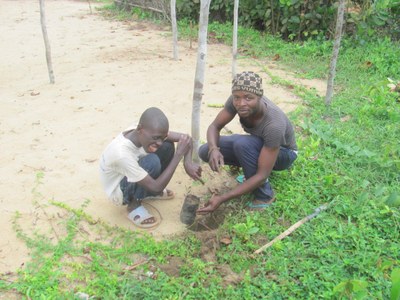
<p style="text-align: justify; "><img src="http://coast.iwlearn.org/en/News%20and%20Events/IMG_1313.JPG/@@images/28aac938-fbfc-4fe8-aa72-06bd60915f1d.jpeg" alt="Tree planting" class="image-right" title="Tree planting" />Another feature that characterizes the Kribi area is the rapid industrialization of the city and, more particularly, in the Ocean Division. Currently, the Demo Site area is at the centre of many industrial, agro-industrial and transport projects. For instance, there is a regional deep sea port complex currently under construction. Together with rapid urban growth and development of the transport network, all these factors are contributing to increased pressure on the coastal and marine ecosystems. Hence the COAST Project team in Kribi is grappling with the challenge of making tourism and industrial development compatible in the area.</p>
<p style="text-align: justify; ">Some of the environmental challenges in the area include:</p>
<ul style="text-align: justify; ">
<li>Coastal erosion aggravated by human activities      such as sand digging, deforestation;</li>
<li>Increased urban pressure on the coastline;</li>
<li>Industrial pollutants and risk of oil spills;</li>
<li>Unsustainable management of natural resources; </li>
<li>Absence of adequate sustainable management      structures resulting from inadequate policy enforcement and absence of      land-use management plans.</li>
</ul>
<p style="text-align: justify; "><b> </b></p>
<p style="text-align: justify; "><b>Showcasing COAST Project Activities in the Kribi Demo Site</b></p>
<p style="text-align: justify; "><b> </b></p>
<ol style="text-align: justify; ">
<li><b>The      COAST Project Working Towards a Better Londji through Eco-tourism</b></li>
</ol>
<p style="text-align: justify; ">Londji is one of the Demo Site areas of the COAST Project in Kribi that is working to leave behind its reputation of a “<i>dirty village</i>” through the support of the COAST Project. It is now set to become the next Eco-tourism destination in Cameroon. Located 15 kilometers west of Kribi, Londji is the largest fishermen village and fish market in Cameroon. The village showcases a vast diversity of peoples and ethnic groups, as the dynamism of the fishing activity has attracted communities from throughout West Africa over recent the years. The community is heterogeneous but integrated.</p>
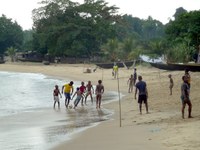
<p style="text-align: justify; "><img src="http://coast.iwlearn.org/en/News%20and%20Events/cicack.jpg/@@images/59d29d27-793a-45dc-a04f-579e7438d616.jpeg" alt="CICAK" class="image-left" title="CICAK" />This bubbling activity gave Londji the name of “le petit port” (<i>the little harbor</i>) as many merchandises arrived to the country via this village.  In the 1970s, Londji with its wide white sand beaches was appointed by the former President Amadou Ahidjo as a tourism development area. However, many years passed and little was done to see this to fruition. On the other hand, illegal activities, bad roads, and inappropriate waste management gave Londji a bad reputation. However, it remained with the tag as the “most beautiful bay of Cameroon” according to most international guides (<i>Bradt, Petit Futé</i>) but lost much of its appeal as a tourism destination.</p>
<p style="text-align: justify; ">The COAST Project, aware that waste management and poor sanitation was a real risk for the health of Londji’s inhabitants, consolidated through regular participatory meetings a community group that took the responsibility of regularly cleaning the beach, and coordinating the development of new Eco-tourism products. The underlying idea was that “<i>A clean environment keeps illness away and attracts tourists</i>”, and it worked. The group recently received its agreement as a community tourism operator under the name of “Londji Eco-tourism Group”.</p>
<p style="text-align: justify; ">Additionally, the project works to foster ongoing conservation efforts of mangroves, and aims at creating tourism value through promoting sustainability products such as mangrove nature trails, walks and boat trips. The position of Londji as the main fishing harbor west of Kribi gives Londji a lot of potential as a departure point for sea boat trips to virgin unexplored beaches in the Lokoundje and Nyong estuaries.  In an increasingly urbanized Kribi, this coast becomes an oasis of paradise with pristine beaches and wetlands, where manatees and dolphins can be spotted during some periods of the year. It is important to note here that, as envisaged by the COAST Project, the resultant partnership in project implementation helps the local community extract some real economic benefits from the touristic activities, and therefore promotes a relationship where the local community and the local industry have found a way to live and work in harmony with the environment. In addition, tourism activities are now taking place in a controlled sustainable way that is good for the environment but also for their economic activities and livelihoods.<b> </b></p>
<p style="text-align: justify; ">The goal is to give tourists visiting Kribi a good reason to do an additional excursion, to stop in Londji to buy some fresh and smoked fish, or to simply relax on the now clean beaches. For this year, a number of activities have been planned by the COAST Project including some training on customer care and tourism handling for the staff of a number of hotels in the area.</p>
<ol style="text-align: justify; ">
<li><b>The COAST Project Inspires a Study to Monitor      Changes in Coastal Areas in Kribi</b></li>
</ol>
<p style="text-align: justify; ">The COAST Project work in Cameroon inspired an initiative by a team of researchers from the Polytechnic University of Madrid in Spain to develop and publish a paper titled, “<i>Use of satellite images for monitoring changes in natural spaces of the coastline”. </i>Our COAST Project team member, Mr. Santiago Ormeno, was part of the research team that co-authored this paper.<i> </i>This study shows that methodologies based on satellite images can be used successfully for monitoring environmental changes in coastal areas. The study was motivated by the realization that 48, 000 km of coastline in Sub Saharan Africa are threatened by the impact of development related activities. In the Kribi Demo Site area, tourism, fisheries, agro-industrial and port activities are competing for dominance in the context of rapid urbanization and industrialization. With a rich biodiversity of vulnerable habitats, it is important to integrate conservation principles in the area.</p>
<p style="text-align: justify; ">During the research, the team working in the field of geodesy<b> </b><b> </b><b>(</b><i>T</i><i>he science of measuring and monitoring the size and shape of the Earth including its gravity field and determining the location of points on the Earth’s surface<b> </b>(NOAA 2013</i><i>) </i>and remote sensing from the Polytechnic University of Madrid developed a technical methodology which produced some useful results for the monitoring and evaluation of changes occurring in the coastal strip. In this study, images from satellites Landsat 5 and 7 were used to obtain environmental indicators and biophysical parameters. The study indicates a reduction of nearly 50% of vegetation cover in the coastal strip from 1984 to 2010.</p>
<p style="text-align: justify; ">Higher intensity land-use changes were observed in the sector from Londji to Kribi, compared to those observed between Kribi and Grand Batanga. Two typologies of change have been identified; the ones resulting from the intensification of agricultural activities, and those due the expansion of the urban area and its communications network. The study concludes that methodologies based on satellite images can be successfully used for monitoring environmental changes in similar cases. The model presented has been used in the mentioned studies and have successfully been used by the authors in other areas. They also offer good potential for replication in analyzing the changes in coastal areas, and it is hoped that the results from this study will be up scaled and used to influence further actions by all the stakeholders in Kribi.</p>
<p style="text-align: justify; "><img src="http://coast.iwlearn.org/en/News%20and%20Events/londji8.JPG/@@images/64538d86-11cb-49c1-b8be-9cf694bd5d68.jpeg" alt="Londji beach" class="image-left" title="Londji beach" /></p>
<ol style="text-align: justify; ">
<li><b>The      COAST Project supports Local Tree Planting Efforts in Kribi </b></li>
</ol>
<p style="text-align: justify; ">Beaches in the Kribi coastline suffer from extreme coastal erosion resulting from changes in tides related to global warming. This erosion reduces the extension of beach shores and presents a real risk for the sustainability of coastal tourism activities in many areas of Kribi. These erosion problems are usually worsened by anthropogenic factors such as illegal sand digging activities and the rapid urbanization of the Kribi coastline, which entails deforestation and loss of vegetation cover. This exposes the adjacent lands to wind and marine erosion.</p>
<p style="text-align: justify; "> </p>
<p style="text-align: justify; ">In cooperation with the National Agency of Forestry Development (ANAFOR), and the Kribi First City Council, the COAST Project in Cameroon launched a tree planting pilot initiative in the Demo Site of Bongahélé (Grand Batanga) in May and June 2012.  The initiative received the name “<i>One tree, one child</i>”. Children from the local community planted over 235 trees donated by the Kribi First<sup> </sup>City Council, individual tourists and local associations.</p>
<p style="text-align: justify; ">This exercise was conducted in cooperation with the Eco-tourism Group of Grand Batanga and endorsed by the village’s traditional chief.  An educational forum about coastal erosion and how it affects livelihoods was also organized in cooperation with environmental NGOs (<i>Model Forest, WWF</i>). A second tree planting activity that attracted significant media coverage by the national TV was organized in June 2012. This activity served to extract valuable lessons regarding the technical requirements needed to carry out a tree planting activity on beach shores, such as the importance of choosing appropriate varieties, taking tides into account, the need of constant follow up in early stages, and the requirement of doing a good sensitization among communities, as trees are normally very easy targets for vandalism. In the long run, a number of tree nurseries should be established to enhance sustainability of such initiatives.</p>
<p style="text-align: justify; ">The COAST Project aims at extending this initiative to other villages in Kribi affected by coastal erosion, specifically in the Lobe Falls area.  A larger proposal to include reforestation of beaches in Kribi will be considered by the Kribi City Hall in its upcoming board meeting.</p>
<p><b> </b></p>
<p><b>Other COAST Project Activities in Kribi</b></p>
<ol> </ol> 
<ul>
<li>On September 21<sup>st</sup> and December 17<sup>th</sup> 2012, the COAST Project organized two workshops in Kribi to validate the sustainable tourism management plans drafted by the project and to review the planned environmental activities. More than 50 representatives from the community, government officials, and private sector participated in these meetings, whose main goal was to build a shared vision regarding development of sustainable tourism activities and development priorities in Demo Sites. </li>
</ul>
<ol> </ol>
<p> </p>
<ol> </ol> 
<ul>
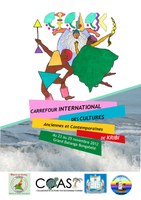
<li>The COAST Project and the Sustainable Coastal Tourism partners showcased Eco-tourism activities in the Grand Batanga Demo Site. The project also supported the 5<sup>th</sup> Edition of the International Cultural Crossroad Kribi festival, a cultural and touristic festival which year after year aims at becoming a “<i>Crossroad of cultural exchanges among different countries and generations</i>” in Cameroon. </li>
</ul>
<ol> </ol>
<p> </p>
<ol> </ol> 
<ul>
<li>The Project partnered with the Campo Ma’an National Park Conservation Service and the Ebotour Marine Turtle Conservation initiatives in the Kribi region. Both Eco-tourism sites are based on the idea that tourism can support conservation efforts of endangered species (<i>great apes and elephants in Campo Ma’an, and marine turtles in Ebodgé</i>). </li>
</ul>
<ol> </ol>
<p><b> </b></p>
<p><b>Conclusion</b></p>
<p style="text-align: justify; ">Some of the results emerging from the Kribi Demo Site clearly place the Site at a vantage position to drive the national plans for sustainable coastal tourism in Cameroon. The COAST Project investments in Londji, Grand Batanga and Lobe Falls, under the Sustainable Coastal Tourism Project, if sustained in the long run will result in improved ecosystems and biodiversity. In this way, the project is delivering on its objective of demonstrating and supporting adoption of best practice approaches for sustainable tourism that reduces the degradation of marine and coastal environments of trans-boundary significance. At the Kribi Demo Site, the ongoing activities are building partnerships that are helping the local community extract real economic benefits from the tourism industry. This has led to a relationship where the local community and the local tourism industry have found a way to live and work in harmony with the environment. In addition, tourism activities are now taking place in a controlled sustainable way that is good for the environment.</p>
<p style="text-align: justify; ">It is important to note here that by safeguarding the environment in the tourism industry at Kribi, sustainable livelihoods and incomes are being realized and are assured in the long run. While challenges associated with rapid urbanization and industrialization remain, further partnerships need to be fostered to ensure sustainability of these initiatives. For instance, the results from the study that monitored changes in the coastal area at Kribi would benefit immensely from concerted actions by all stakeholders, including private–public partnerships, to reduce the harmful impacts resulting from human activities in the coastal area. In this regard, increasing tourist numbers should not be allowed to negatively impact on the fragile ecosystems in Kribi, and this is at the heart of COAST Project at this Demo Site. This will go a long way in helping nurture a shared vision towards sustainable tourism in coastal areas in Africa.</p>]]></content:encoded>
    <dc:publisher>No publisher</dc:publisher>
    <dc:creator>g.omedo@unido.org</dc:creator>
    <dc:rights></dc:rights>
    <dc:date>2013-04-11T09:55:00Z</dc:date>
    <dc:type>News Item</dc:type>
  </item>


  <item rdf:about="http://coast.iwlearn.org/en/News%20and%20Events/why-knowledge-management-is-vital-for-the-coast-project-success">
    <title>Why Knowledge Management is Vital for the COAST Project Success</title>
    <link>http://coast.iwlearn.org/en/News%20and%20Events/why-knowledge-management-is-vital-for-the-coast-project-success</link>
    <description></description>
    <content:encoded xmlns:content="http://purl.org/rss/1.0/modules/content/"><![CDATA[<p style="text-align: justify; "><strong>What is Knowledge Management? </strong></p>
<p style="text-align: justify; ">There are as many definitions for Knowledge Management as there are organizations, and there is still no consensus yet on the most effective way to define ‘KM’ (a popularly used synonym). While some institutions define KM to be about systems and technologies, others have defined KM to be about people, processes and learning organizations/systems. This complex interplay of organizational features however all have some indication of what KM actually means, but it varies from one organization to the other.</p>
<p style="text-align: justify; "><img src="http://coast.iwlearn.org/en/News%20and%20Events/copy_of_Dugoutcanoetoursatsunset.JPG/@@images/d5ab082e-83f0-4877-a52a-ef44bcec163b.jpeg" alt="Canoe" class="image-left" title="Canoe" /></p>
<p style="text-align: justify; ">Some UN agencies (UNICEF, UNDP) have defined KM as "<i>an integrated, systematic approach to identifying, managing and sharing an organization’s knowledge, and enabling groups of people to create new knowledge collectively in order to achieve the objectives of the organization</i>". Such a definition tries to broaden the operational scope of KM to include human knowledge (<i>intelligence</i>) inherent within the organization. The Global Environmental Facility (GEF) on its part defines  Knowledge Managements as a ‘ …<i>set of specific actions developed (gathering data, analyzing processes, results and personal experiences, capturing and sharing lessons learned) so that the knowledge of an individual or an institution reaches, in a timely manner, the largest number of people who can benefit from it…’ (GEF KMI 2011)</i>.</p>
<p style="text-align: justify; "><strong>How is KM applied in different institutions?</strong></p>
<p style="text-align: justify; ">Since Knowledge Management is still new and evolving, its definition is still quite ambiguous. However, most institutions have adopted one or more components of what KM is and are applying it to enhance operational efficiency, improved documentation, measurement of results and information sharing. Other institutions have mainstreamed KM into their critical strategy documents to drive corporate ‘turnaround’. For instance, UNIDO’s Knowledge Management Strategy Paper, seeks to apply its KM Strategy as a pathway to transforming the institution from “..<i>a </i><i>multi-platform, silo-based Knowledge Management environment to a future-proof, single-platform and collaboration-oriented knowledge-based organization.</i>” KM therefore seeks to respond to the different needs and targets of various Organizations/Institutions for improved results.</p>
<p style="text-align: justify; ">For instance, private sector institutions value a KM definition/model that could enhance productivity resulting in improved profit margins and general effectiveness. Government institutions could value KM models that result in improved service delivery, accountability and resourcefulness of its citizenry. For development institutions, and in this case the United Nations agencies such as <i>UNIDO, UNEP and UNWTO</i>, knowledge platforms resulting in improved capabilities to drive societal change and spur innovative actions for sustainable development would be more practical and sound.</p>
<p style="text-align: justify; "><strong>KM in the context of the COAST Project: What to expect in Project Implementation?</strong></p>
<p style="text-align: justify; "><img src="http://coast.iwlearn.org/en/News%20and%20Events/Mangroveboardwalkandrestaurant.JPG/@@images/c2ce2a95-98f9-4527-9bd1-18105b1b4ed9.jpeg" alt="Mangrove " class="image-right" title="Mangrove " />In the context of the COAST Project, and as we move to implement the recommendations of the Mid Term Evaluation, a strategic shift has taken place to adopt a KM Strategy that will focus on capturing and disseminating knowledge, best practices and lessons learned coming out of the COAST project. The Strategy aims to develop and implement appropriate activities to foster a new level of engagement with all coastal tourism stakeholders involved in this project at the local, national and international levels. This Strategy will seek to assist the partner countries to strengthen the integration and impact of the project objectives and activities, as well as to feed key outputs into local, national and international policies and practices.</p>
<p style="text-align: justify; ">The lessons learned and best practice case studies, as well as know-how on appropriate processes and concrete recommendations for improving the environment and coastal management will be repackaged into different knowledge management tools. Our KM Strategy will be implemented using an array of knowledge management tools and approaches (<i>i.e. written and visual materials such as Newsletters, fact sheets, exposes and reports etc</i>). These tools and approaches will engage global and country-based media agencies, the respective Ministries of Tourism and Environment in the partner countries, locally-based coastal tourism stakeholders and the communities surrounding the COAST project activities.</p>
<p style="text-align: justify; "><strong>The Strategy intends to thereby generate increased public awareness and demand for actions to prevent, and control the degradation of marine and coastal ecosystems from potential pollution and contamination. </strong></p>
<p style="text-align: justify; "><strong>Knowledge Management Result Areas for the COAST Project </strong></p>
<p style="text-align: justify; ">The COAST Project Knowledge Management Strategy will have four main result areas, as summarized in the table below:</p>
<table style="text-align: justify; ">
<tbody>
<tr>
<td>
<p align="center"><strong>Knowledge   Management Result Areas for the COAST Project</strong></p>
</td>
</tr>
<tr>
<td>
<p><strong>THEME 1:   COASTAL BEST PRACTICES AND TECHNOLOGIES</strong> – These KM products will document some of the best practices and   processes within the three main thematic areas of the COAST Project (<i>EMS, Eco-tourism, Reef and Marine   Recreation Management</i>) emerging from the COAST Demo Sites. It will focus on   showcasing some of the demonstrated localized BAP/BATs. The portrayal of the best   practices will contain comprehensive information on the various processes and   technologies being applied in the respective local realities.</p>
</td>
</tr>
<tr>
<td>
<p><strong>THEME 2: COASTAL LOCAL VOICES</strong> – This COAST KM result area will   focus on documenting the impacts of the project within, as well as to the   local communities. It will entail following up with project leaders,   beneficiaries and communities in all the countries and capturing their voices   to provide a human account of how their interactions with the project have   improved their livelihood. This will use participatory methodologies and   approaches to ensure we document the human stories of sustainable coastal   tourism in Africa.</p>
</td>
</tr>
<tr>
<td>
<p><strong>THEME 3:   COASTAL ENVIRONMENTAL ECONOMIC DYNAMICS</strong> – The coastal ecosystem is very   valuable to the countries we work in. Hence this KM result area will seek to   document the value of our work in real economic terms. This KM result area   will give a special emphasis to the private sector players and how   implementation of COAST project themes (<i>RMRM,   EMS, Eco-Tourism including Small and Medium Enterprise (SME) developments</i>)   is contributing to improved results. It is expected that the Private sector   players will drive the work to ensure long-term sustainability.</p>
</td>
</tr>
<tr>
<td>
<p><strong>THEME 4: COASTAL POLICY CHANGE PROCESSES</strong> – The COAST Project KM   Strategy will seek to identify some of the policy interventions emerging and   those that are needed to enhance sustainable coastal tourism at national,   regional and global levels. These will closely follow the Sustainable Tourism   Governance work being driven by UNWTO and UNIDO under the COAST Project. <strong> </strong></p>
</td>
</tr>
</tbody>
</table>
<p style="text-align: justify; "><strong>Conclusion</strong></p>
<p style="text-align: justify; ">The role of a sound Knowledge Management and Communication Strategy to the COAST Project is now more than ever before of critical importance for sustained delivery. With the four KM themes of Coastal Best Practices and Technologies; Coastal Local Voices; Coastal Environmental Economic Dynamics; and Coastal Policy Change processes, the COAST Project will generate useful products that will inform public discourse in the area of sustainable tourism in Africa and to be able to contribute to the ongoing global dialogue on the same.  It is hoped that the lessons learned and know-how coming out of the COAST Project will be transformed into specific recommendations that have the potential to serve as valuable contributions and inputs to the respective national Tourism and Environment strategies, policies and practices and to future similar project initiatives. In this way, the COAST Project will be able to contribute to policy changes in tourism practices and inspire replications and spin off projects through this KM Strategy.</p>
<p style="text-align: justify; "> </p>
<p style="text-align: justify; "><strong>By Geoffrey Omedo,</strong></p>
<p style="text-align: justify; "><strong>Knowledge Management and Communications Officer</strong></p>]]></content:encoded>
    <dc:publisher>No publisher</dc:publisher>
    <dc:creator>g.omedo@unido.org</dc:creator>
    <dc:rights></dc:rights>
    <dc:date>2013-02-19T09:25:00Z</dc:date>
    <dc:type>News Item</dc:type>
  </item>


  <item rdf:about="http://coast.iwlearn.org/en/gallery/ghana/white%20mangroves%20seen%20at%20the%20site.jpg">
    <title>white mangroves seen at the site.jpg</title>
    <link>http://coast.iwlearn.org/en/gallery/ghana/white%20mangroves%20seen%20at%20the%20site.jpg</link>
    <description></description>
    
    <dc:publisher>No publisher</dc:publisher>
    <dc:creator>g.omedo@unido.org</dc:creator>
    <dc:rights></dc:rights>
    <dc:date>2013-10-10T08:27:42Z</dc:date>
    <dc:type>Image</dc:type>
  </item>


  <item rdf:about="http://coast.iwlearn.org/en/News%20and%20Events/sustainable-coastal-tourism-in-the-news-2/well-managed-tourism-can-help-protect-the-world2019s-wetlands">
    <title>Well- managed tourism can help protect the world’s wetlands</title>
    <link>http://coast.iwlearn.org/en/News%20and%20Events/sustainable-coastal-tourism-in-the-news-2/well-managed-tourism-can-help-protect-the-world2019s-wetlands</link>
    <description>Whether kayaking in the Ibera Marshes in Argentina or bird-watching at Ba-Be Lake in Vietnam, tourists are providing income for the conservation of wetlands worldwide, as demonstrated in a new publication launched by the Ramsar Secretariat and UNWTO.</description>
    <content:encoded xmlns:content="http://purl.org/rss/1.0/modules/content/"><![CDATA[<p><span style="text-align: justify; ">Besides providing essential services such as water, food and energy, wetlands offer significant opportunities for tourism, which can in turn deliver economic benefits for local communities and the sustainable management of wetlands, according to the publication</span><i style="text-align: justify; ">Destination Wetlands: Supporting Sustainable Tourism.</i></p>
<p style="text-align: justify; "><br />Growth in sustainable tourism not only reflects environmental realities, but also a desire from tourists themselves to embrace green tourism. <i>“There is a trend among tourists of turning towards green forms of tourism, towards destinations that offer wildlife and heritage,” </i>said <strong>Cristian Barhalescu</strong>, State Secretary, Ministry of Regional Development and Tourism of Romania.<i> “As wetlands, with their diversity and richness, become subject to tourism development, the interconnection between tourism and wetlands should be given special attention by all actors involved.”</i><br /><br />Through 14 case studies, covering different wetland types around the world, the publication demonstrates how sustainable tourism practices in and around wetlands can contribute to conservation, economic growth, poverty reduction and support to local cultures.<br /><br />The publication was launched at the 11th Meeting of the Conference of the Contracting Parties to the Ramsar Convention on Wetlands (COP11) in Bucharest, Romania (6-13 July 2012). Held under the theme Wetlands and Tourism, COP11 will debate a landmark Resolution on Wetlands and Tourism, urging sound tourism practices in wetlands.<br /><br /><i><img src="http://coast.iwlearn.org/en/BeachMangroves.JPG/@@images/f67d7e28-b41c-4707-b17d-1478a0a46ab7.jpeg" alt="" class="image-left" title="" />"The adoption of this Resolution on Tourism and Wetlands will provide an important framework to help countries better recognize the linkages between wetlands and tourism so as to develop sustainable tourism in wetlands and other ecosystems. It proposes measures that they can take in the short and long term to ensure sustainable wetland tourism," </i>said <strong>Anada Tiega</strong>, Secretary General of the Ramsar Convention. <i>"Of course it is important to consider tourism in all wetlands – not just those designated as Ramsar Sites – since the Contracting Parties to the Convention are committed to managing all wetlands and promoting their wise use."</i><br /><i><br /></i><i>“For Romania, the development of eco-tourism in the wetlands is a priority, and an example in this respect is the Danube Delta. Ramsar Sites in Romania must be placed at the very centre of our attention and the Ministry of Environment and Forests, together with the Ministry of Regional Development and Tourism, will ensure that this becomes a reality,” </i>stated <strong>Corneliu Mugurel</strong> <strong>Cozmanciuc</strong>, State Secretary, Ministry of Environment and Forests of Romania.<br /><br />The focus on tourism at COP11 comes on the back of increasing collaboration between UNWTO and the Ramsar Secretariat. Since 2010, both have been working together towards the development of sustainable wetland tourism, with World Wetlands Day 2012 (2 February) celebrated under the theme “Wetlands and Tourism: A Great Experience”.<br /><br />“Wetlands are one of tourism’s greatest assets, attracting millions of tourists each year,” said UNWTO Secretary-General, Taleb Rifai. “Working in close partnership with the Ramsar Secretariat, UNWTO is determined to sustainably manage wetland tourism through sound polices and planning, thereby conserving them for the enjoyment of generations to come.”<br /><br />International tourist arrivals reached 982 million in 2011 and are expected to top one billion in 2012, generating over US$ 1 trillion in international tourism receipts. It is estimated that half of all tourists travel to wetlands, particularly coastal areas.</p>
<p style="text-align: justify; ">The full link to the article is found here: <a href="http://www.traveldailynews.com/pages/show_page/50307-Well-managed-tourism-can-help-protect-the-world%E2%80%99s-wetlands">http://www.traveldailynews.com/pages/show_page/50307-Well-managed-tourism-can-help-protect-the-world%E2%80%99s-wetlands</a>;</p>]]></content:encoded>
    <dc:publisher>No publisher</dc:publisher>
    <dc:creator>g.omedo@unido.org</dc:creator>
    <dc:rights></dc:rights>
    <dc:date>2012-07-23T09:00:00Z</dc:date>
    <dc:type>News Item</dc:type>
  </item>


  <item rdf:about="http://coast.iwlearn.org/en/gallery/cameroon/Webraising%20Training%20Kribi.JPG">
    <title>Webraising Training Kribi.JPG</title>
    <link>http://coast.iwlearn.org/en/gallery/cameroon/Webraising%20Training%20Kribi.JPG</link>
    <description></description>
    
    <dc:publisher>No publisher</dc:publisher>
    <dc:creator>g.omedo@unido.org</dc:creator>
    <dc:rights></dc:rights>
    <dc:date>2013-10-10T08:22:54Z</dc:date>
    <dc:type>Image</dc:type>
  </item>


  <item rdf:about="http://coast.iwlearn.org/en/gallery/demo-site-maps/Watamu_Marine%20Habitats1.jpg">
    <title>Watamu_Marine Habitats1.jpg</title>
    <link>http://coast.iwlearn.org/en/gallery/demo-site-maps/Watamu_Marine%20Habitats1.jpg</link>
    <description></description>
    
    <dc:publisher>No publisher</dc:publisher>
    <dc:creator>g.omedo@unido.org</dc:creator>
    <dc:rights></dc:rights>
    <dc:date>2014-02-19T06:47:12Z</dc:date>
    <dc:type>Image</dc:type>
  </item>


  <item rdf:about="http://coast.iwlearn.org/en/gallery/demo-site-maps/Watamu_Marine%20Habitats.jpg">
    <title>Watamu_Marine Habitats.jpg</title>
    <link>http://coast.iwlearn.org/en/gallery/demo-site-maps/Watamu_Marine%20Habitats.jpg</link>
    <description></description>
    
    <dc:publisher>No publisher</dc:publisher>
    <dc:creator>g.omedo@unido.org</dc:creator>
    <dc:rights></dc:rights>
    <dc:date>2014-02-19T06:47:04Z</dc:date>
    <dc:type>Image</dc:type>
  </item>


  <item rdf:about="http://coast.iwlearn.org/en/gallery/demo-site-maps/Watamu_Kenya_TourismElemnts_A3_20131220_highres_v3.jpg">
    <title>Watamu_Kenya_TourismElemnts_A3_20131220_highres_v3.jpg</title>
    <link>http://coast.iwlearn.org/en/gallery/demo-site-maps/Watamu_Kenya_TourismElemnts_A3_20131220_highres_v3.jpg</link>
    <description></description>
    
    <dc:publisher>No publisher</dc:publisher>
    <dc:creator>g.omedo@unido.org</dc:creator>
    <dc:rights></dc:rights>
    <dc:date>2014-02-25T08:22:41Z</dc:date>
    <dc:type>Image</dc:type>
  </item>


  <item rdf:about="http://coast.iwlearn.org/en/gallery/demo-site-maps/Watamu_Kenya_ImpactedSites_A3_20131221_highres_v3.jpg">
    <title>Watamu_Kenya_ImpactedSites_A3_20131221_highres_v3.jpg</title>
    <link>http://coast.iwlearn.org/en/gallery/demo-site-maps/Watamu_Kenya_ImpactedSites_A3_20131221_highres_v3.jpg</link>
    <description></description>
    
    <dc:publisher>No publisher</dc:publisher>
    <dc:creator>g.omedo@unido.org</dc:creator>
    <dc:rights></dc:rights>
    <dc:date>2014-02-25T08:21:38Z</dc:date>
    <dc:type>Image</dc:type>
  </item>


  <item rdf:about="http://coast.iwlearn.org/en/gallery/demo-site-maps/Watamu_Hotels.jpg">
    <title>Watamu_Hotels.jpg</title>
    <link>http://coast.iwlearn.org/en/gallery/demo-site-maps/Watamu_Hotels.jpg</link>
    <description></description>
    
    <dc:publisher>No publisher</dc:publisher>
    <dc:creator>g.omedo@unido.org</dc:creator>
    <dc:rights></dc:rights>
    <dc:date>2014-02-19T06:46:54Z</dc:date>
    <dc:type>Image</dc:type>
  </item>


  <item rdf:about="http://coast.iwlearn.org/en/gallery/kenya/Watamu.jpg">
    <title>Watamu.jpg</title>
    <link>http://coast.iwlearn.org/en/gallery/kenya/Watamu.jpg</link>
    <description></description>
    
    <dc:publisher>No publisher</dc:publisher>
    <dc:creator>g.omedo@unido.org</dc:creator>
    <dc:rights></dc:rights>
    <dc:date>2014-02-19T06:26:23Z</dc:date>
    <dc:type>Image</dc:type>
  </item>


  <item rdf:about="http://coast.iwlearn.org/en/gallery/kenya/watamu-tourism-map.jpg">
    <title>watamu-tourism-map.jpg</title>
    <link>http://coast.iwlearn.org/en/gallery/kenya/watamu-tourism-map.jpg</link>
    <description></description>
    
    <dc:publisher>No publisher</dc:publisher>
    <dc:creator>Taya Santives</dc:creator>
    <dc:rights></dc:rights>
    <dc:date>2013-05-07T12:15:25Z</dc:date>
    <dc:type>Image</dc:type>
  </item>


  <item rdf:about="http://coast.iwlearn.org/en/baps-and-bats/Research%20and%20Environmental-analyses/kenya-demo-site-gis-map-products/watamu-tourism-map.jpg">
    <title>watamu-tourism-map.jpg</title>
    <link>http://coast.iwlearn.org/en/baps-and-bats/Research%20and%20Environmental-analyses/kenya-demo-site-gis-map-products/watamu-tourism-map.jpg</link>
    <description></description>
    
    <dc:publisher>No publisher</dc:publisher>
    <dc:creator>Taya Santives</dc:creator>
    <dc:rights></dc:rights>
    <dc:date>2012-07-01T16:05:29Z</dc:date>
    <dc:type>Image</dc:type>
  </item>


</rdf:RDF>