<?xml version="1.0" encoding="utf-8" ?>
<rdf:RDF xmlns:rdf="http://www.w3.org/1999/02/22-rdf-syntax-ns#" xmlns:dc="http://purl.org/dc/elements/1.1/" xmlns:syn="http://purl.org/rss/1.0/modules/syndication/" xmlns="http://purl.org/rss/1.0/">


<channel rdf:about="http://coast.iwlearn.org/en/search_rss">
  <title>English</title>
  <link>http://coast.iwlearn.org</link>

  <description>
    
            These are the search results for the query, showing results 41 to 55.
        
  </description>


  <image rdf:resource="http://coast.iwlearn.org/logo.png"/>

  <items>
    <rdf:Seq>
      
        <rdf:li rdf:resource="http://coast.iwlearn.org/en/News%20and%20Events/gambia-coast-project-pave-the-way-for-better-managing-cleanliness-in-the-country"/>
      
      
        <rdf:li rdf:resource="http://coast.iwlearn.org/en/News%20and%20Events/seychelles-sustainable-tourism-label-certifies-three-hotels"/>
      
      
        <rdf:li rdf:resource="http://coast.iwlearn.org/en/News%20and%20Events/security-is-africas-maritime-strategy-all-at-sea"/>
      
      
        <rdf:li rdf:resource="http://coast.iwlearn.org/en/News%20and%20Events/senegal-secures-its-sealine"/>
      
      
        <rdf:li rdf:resource="http://coast.iwlearn.org/en/News%20and%20Events/watamu-still-far-from-exploiting-its-potential-1"/>
      
      
        <rdf:li rdf:resource="http://coast.iwlearn.org/en/gallery/photos-videos/photos/home-page-skins"/>
      
      
        <rdf:li rdf:resource="http://coast.iwlearn.org/en/sustainable-coastal-tourism-news-africa/1b83a6744fe3c2b93e277facfe38e0df"/>
      
      
        <rdf:li rdf:resource="http://coast.iwlearn.org/en/sustainable-coastal-tourism-news-africa/caed3290fd0c56a95e1f543b5858379d"/>
      
      
        <rdf:li rdf:resource="http://coast.iwlearn.org/en/sustainable-coastal-tourism-news-africa/4ec6547adc38fa532a6f33890310ee1c"/>
      
      
        <rdf:li rdf:resource="http://coast.iwlearn.org/en/sustainable-coastal-tourism-news-africa"/>
      
      
        <rdf:li rdf:resource="http://coast.iwlearn.org/en/sustainable-coastal-tourism-news-africa/6ecc76c9bdf9b35972ea1e6a6309e318"/>
      
      
        <rdf:li rdf:resource="http://coast.iwlearn.org/en/sustainable-coastal-tourism-news-africa/423ba7c6dcc37e1b27fd478f87da51de"/>
      
      
        <rdf:li rdf:resource="http://coast.iwlearn.org/en/sustainable-coastal-tourism-news-africa/06cb6a3abbcacfac4acbd7b73d4c0c30"/>
      
      
        <rdf:li rdf:resource="http://coast.iwlearn.org/en/the-new-website"/>
      
      
        <rdf:li rdf:resource="http://coast.iwlearn.org/en/baps-and-bats/examples-of-baps-bats-in-coast-project/practical-examples-of-baps-bats-in-coast-project"/>
      
    </rdf:Seq>
  </items>

</channel>


  <item rdf:about="http://coast.iwlearn.org/en/News%20and%20Events/gambia-coast-project-pave-the-way-for-better-managing-cleanliness-in-the-country">
    <title>Gambia: COAST project pave the way for better managing cleanliness in the country</title>
    <link>http://coast.iwlearn.org/en/News%20and%20Events/gambia-coast-project-pave-the-way-for-better-managing-cleanliness-in-the-country</link>
    <description>Thursday, November 08, 2012

Hello and a warm welcome to another edition of Environment, your weekly column aimed at bringing environmental issues into the limelight.</description>
    <content:encoded xmlns:content="http://purl.org/rss/1.0/modules/content/"><![CDATA[<p>In today’s edition we bring you an interview with Mr. Abubacarr Kujabi the Project Demonstration Coordinator  of  the COAST Project under the National Environment Agency on their latest  intervention in their bid cub the problems of illegal dumping and waste  control and management.</p>
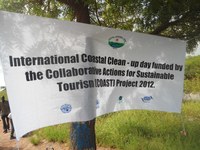
<p>The  Gambia has joined the international community to celebrate  International Coastal Clean up day. This event is observed on the third  Saturday of September each year, and this year it was held recently with  special focus areas of the following to:-</p>
<p>1.         Remove debris from water bodies including the coastline and beaches</p>
<p>2.         Collect valuable information about debris and type of waste collected</p>
<p>3.         Increase public awareness on the effects of litter and debris on the aquatic ecosystem.</p>
<p>4.         Make positive changes and to promote waste prevention efforts around the coastal environment.</p>
<p>As  part of the activities to mark the event, the National Environment  Agency in collaboration with coastal communities, local NGOs, Community  Based Organizations’, Civil society, Security Forces and the Local  Municipalities had embarked on clean up exercise along the coastline  from Banjul ferry terminal to Kartong fish landing site and also at  Barra, Bamba Tenda and Yelli Tenda ferry crossing points in North Bank  Region.</p>
<p>According  to him, the debris in our coastline if not removed, can be harmful and  even fatal to all manners of marine wildlife, can damage our country’s  economy and even become a human health hazard. The Coastal Cleanup Day  is a great way for stakeholders in the coastal zone, families, students,  service groups, neighbor to join together, take care of our fragile  marine environment, show community support for our shared natural  resources, learn about the impacts of marine debris and how we can  prevent them, and to have fun.</p>
<p><img src="http://coast.iwlearn.org/en/News%20and%20Events/DSC03480.JPG/@@images/64ce1192-4202-4976-bf34-74942e668d64.jpeg" alt="COAST" class="image-left" title="COAST" /></p>
<p>“The  main sources of waste along the Gambia coastline apart from the waste  generated from the fish processing at landing sites are mainly from  passengers using river transportation system (ferries and boats  services), frequent Sunday beach parties along the coastline,  uncontrolled waste from hoteliers and runoff water during rainy season  carrying waste from land to the coastal areas”, he added.</p>
<p>Usually  wastes generated from these sources are not properly controlled and  sometimes not regularly collected thereby causing pollution in our  coastline and water bodies.</p>
<p>Noting  that, cleanliness of our coast and marine ecosystem will contribute to  the health of the people and the environment particularly our wetland  ecosystem which supports high biodiversity which we all depend on for  our daily livelihood. In addition this important clean up exercise has  also strengthened the efforts of the Tourism Sector in their preparation  for the 2012/2013 tourist season began in October 2012.</p>
<p>This year’s International Coastal Cleanup Day was funded by Collaborative Actions for Sustainable Tourism (COAST) Project.</p>
<p>Mr.  Kujabi: highlighted that the COAST Project is a UNEP implemented,  Global Environmental Facility (GEF) supported project that is executed  by UNIDO in collaboration with UNWTO (UN World Tourism Organization).  The project objective is to “demonstrate and support the adoption of  best practice approaches for sustainable tourism that reduce the  degradation of marine and coastal environments of trans-boundary  significance”.</p>
<p>The  project approach will provide important lessons on how to sustain an  emerging and dynamic tourism sector in Africa, while conserving fragile  coastal ecosystems within the context of rapidly changing environments  and increased international tourism. The Project has demonstration sites  in eight African countries, (The Gambia, Senegal, Ghana, Nigeria,  Cameroon, Seychelles, Tanzania, Kenya and Mozambique).</p>
<p>The  Gambia Ports Authority had also contributed both financially and  manpower in observing the day. The support from GPA had further enhanced  NEA in mobilizing resources for a better and adequate participation of  the public.</p>
<p> </p>
<p>For your comments, suggestions and contributions, please contact (00220) 6361340/7142236 or Email: bajgambia2011@yahoo.com</p>
<p>Author: <strong>Abdou Rahman Sallah</strong></p>
<p><a class="external-link" href="http://thepoint.gm/africa/gambia/article/environment-coast-project-pave-the-way-for-better-managing-cleanliness-in-the-country"><b>This article is availabe here</b></a></p>]]></content:encoded>
    <dc:publisher>No publisher</dc:publisher>
    <dc:creator>g.omedo@unido.org</dc:creator>
    <dc:rights></dc:rights>
    <dc:date>2012-11-08T12:40:00Z</dc:date>
    <dc:type>News Item</dc:type>
  </item>


  <item rdf:about="http://coast.iwlearn.org/en/News%20and%20Events/seychelles-sustainable-tourism-label-certifies-three-hotels">
    <title>Seychelles Sustainable Tourism Label Certifies Three Hotels</title>
    <link>http://coast.iwlearn.org/en/News%20and%20Events/seychelles-sustainable-tourism-label-certifies-three-hotels</link>
    <description>The first three tourism establishments to have been assessed and are now certified by the SSTL for integrating sustainability practices into their business operations.</description>
    <content:encoded xmlns:content="http://purl.org/rss/1.0/modules/content/"><![CDATA[<div id="wrap">
<div class="marginTop10">
<div id="columns">
<div id="bg">
<div id="colLeft">
<div class="article">
<div class="holder">
<div class="padding">
<p>The Seychelles Sustainable Tourism Label (SSTL) has awarded its first three certified tourism establishments with their sustainable label certificates, during the grand annual Seychelles Ball that took place at the Constance Ephelia Resort.</p>
<p>The first three tourism establishments to have been assessed and are now certified by the SSTL for integrating sustainability practices into their business operations are <strong>Berjaya Beau Vallon Bay Resort&amp;Casino, Hanneman’s Holiday Residence, </strong>and<strong> Constance Ephelia Resort.</strong></p>
<p>On hand to present the three hospitality operators with their SSTL certificates was the Minister of Tourism and Culture, Alain St. Ange. He presented the three enterprises with their certificates in the presence of the Seychelles Tourism Board Chief Executive, Elsia Grand Court, and Chairman of the Seychelles Hospitality and Tourism Association, Louis D’Offay, along other guests of the evening.</p>
<p>Adopted first by the Ministry of Tourism and now the Seychelles Tourism Board, the SSTL is a sustainable tourism management and certification program designed specifically for use in Seychelles. The concept of developing such a label originated from the Ministry of Tourism in the preparation of Vision 21.</p>
<p>The SSTL encourages hotels in Seychelles to mainstream sustainability practices into their operations with the aim of safeguarding the biodiversity and culture of the country.</p>
<p>Applicable to hotels of all sizes, the SSTL is voluntary, user-friendly, and designed to inspire more efficient and sustainable ways of doing business. It is a third-party assessed, points-based certification scheme.</p>
<p>In order to be certified by the SSTL, a hotel needs to demonstrate that it has adopted a minimum number of sustainable business practices, some of which are requirements while others are optional.</p>
<p>To achieve the SSTL, participating hotels need to meet three basic criteria: fulfill the 24 “must” criteria, achieve a minimum score for each theme - 5 points for small establishments (1-24 rooms), 6 points for medium-sized enterprises (25 to 50 rooms), and 7 points for large enterprises (51+ rooms), and score an additional 6 points in any area. The set of standards is made up of the following 8 themes: Management, Waste, Water, Energy, Staff, Conservation, Community, and Guests.</p>
<p>Upon achieving the SSTL, the General Manager of the Berjaya Beau Bay Resort&amp;Casino, Ken Choo, has said that adopting the label is the right way forward.</p>
<p>“We are indeed very happy to be one of the hotel operators to have received the first certificate of Seychelles Sustainable Tourism Label from the Minister of Tourism and Culture,” expressed Mr. Choo, “This year’s theme ‘Powering Sustainable Development’ is very relevant, because as the global business environment becomes more challenging, we as hotel operators have to swiftly adopt various sustainable practices in order to maintain our competitive advantage.”</p>
<p>On a similar note, owners of the Hanneman Holiday Residence, Mr. Heinkelein and Mrs. Harutunian have said they are grateful that this initiative has been introduced by the Ministry of Tourism and Culture. “More and more guests and visitors will acknowledge, appreciate, and support this initiative as Seychelles is at the forefront and contributing towards a sustainable Seychelles and a greener world,” added the owners of Hanneman Holiday Residence.</p>
<p>The Constance Ephelia Resort on its part has said that they feel that being an SSTL-certified hotel will offer more significant benefits to the eco-image of their resort by showcasing them among the first responsible hotels of Seychelles. “In making our efforts and achievements public, we will better encourage eco-travellers to spend their holidays with us. We will continue to mainstream sustainability into our day-to-day operation, bring value to our community and the clients we serve, and continue to add value to our resort through effective eco-practices,” affirmed the management of the Constance Ephelia Resort.</p>
<p>Application for the SSTL was launched earlier on June 1, 2012. Hotels in Seychelles are encouraged to do their internal audits to ensure that they meet the “must” criteria before making an application. The result of the internal audit must be attached to the letter of application. Technical assistance and one-on-one meetings can be arranged with the SSTL manager, Sinha Levkovic, to assist the applicants in better understanding the criteria requirements prior to applications.</p>
<p><strong><a class="external-link" href="http://www.breakingtravelnews.com/news/article/seychelles-sustainable-tourism-label-certifies-three-hotels/">The original article appeared here </a></strong></p>
</div>
</div>
</div>
</div>
</div>
</div>
</div>
</div>
<div id="footer"></div>
<div class="fb_reset " id="fb-root">
<div>
<div></div>
<div></div>
</div>
</div>
<div id="at20mc">
<div id="at16pcc"></div>
</div>]]></content:encoded>
    <dc:publisher>No publisher</dc:publisher>
    <dc:creator>g.omedo@unido.org</dc:creator>
    <dc:rights></dc:rights>
    <dc:date>2012-10-23T12:50:00Z</dc:date>
    <dc:type>News Item</dc:type>
  </item>


  <item rdf:about="http://coast.iwlearn.org/en/News%20and%20Events/security-is-africas-maritime-strategy-all-at-sea">
    <title>SECURITY: Is Africa's maritime strategy all at sea?</title>
    <link>http://coast.iwlearn.org/en/News%20and%20Events/security-is-africas-maritime-strategy-all-at-sea</link>
    <description>Illegal and unregulated fishing is a routine activity in Africa's territorial waters</description>
    <content:encoded xmlns:content="http://purl.org/rss/1.0/modules/content/"><![CDATA[<h1><a href="http://www.irinnews.org/photo/details.aspx?imageid=201103250926300595"><img src="http://www.irinnews.org/images/2011/201103250926300595.jpg" style="float: left; " /></a></h1>
<div align="center" class="photobox fl">
<div style="text-align: left; "><span style="text-align: right; ">Photo: </span><a href="http://www.irinnews.org/photo.aspx" style="text-align: right; ">Guy Oliver/IRIN</a></div>
<div style="text-align: left; "></div>
<div style="text-align: left; ">JOHANNESBURG,  22 October 2012 (IRIN) - The African Union’s (AU) deadline for securing  the continent’s territorial waters - the world’s last major  geographical region without a maritime strategy - has been set at 2050, a  target that may prove untenable.</div>
</div>
<p><br /> Without a comprehensive strategy to police, patrol and promote the  maritime economy and resources along its 42,000km coastline, Africa  loses billions of dollars in revenue annually and leaves itself  vulnerable to myriad criminal activities. <br /> <br /> “Africa remains the continent that suffers most from illegal and  unregulated fishing, maritime terrorism, piracy and armed robbery at  sea, poor legal and regulatory maritime regimes, illegal drugs, arms and  human trafficking, a lack of effective communication and other  technological maritime requirements, and last but not least, unsuitable  ships and ports,” Annette Leijenaar, Head of the Conflict Management and  Peacebuilding Division at the <a href="http://www.issafrica.org/" target="_blank">Institute for Security Studies</a> (ISS), a Pretoria-based think tank, said in a recent policy brief titled <a href="http://www.issafrica.org/iss_today.php?ID=1552" target="_blank">Africa Should Wake up to the Importance of an Integrated Maritime Strategy</a>. <br /> <br /> A meeting on the Africa Integrated Maritime (AIM) strategy was held  earlier this month in the Ethiopian capital Addis Ababa. Leijenaar told  IRIN, “It is the right direction, however, action is required through  implementable plans that are well coordinated and have the political  commitment of African leaders.” The AU will also address management of  riverine systems, dams and wetlands. <br /> <br /> “Like the rest of the world, more than 90 percent of Africa’s imports  and exports are carried by sea. If one includes the illegal market in  military arms and logged forest products, Africa has a maritime economy  estimated at US$1 trillion a year, representing 90 percent of its  overall commerce,” the policy brief said. <br /> <br /> Of Africa’s 54 states, 38 are either coastal or island nations. Johan  Potgieter, a former captain in the South African navy and senior ISS  security sector researcher - referring to neglect of maritime  opportunities and risks - told IRIN, “Sea blindness is our [Africa’s]  biggest threat.” <br /> <br /> <strong>No defence <br /> </strong><br /> Some 70 percent of the continent’s rapidly growing population - which  currently stands at over one billion people - depend on fish, both  inland and coastal, for protein, highlighting the importance of policing  and managing the continent’s territorial waters. <br /></p>
<table align="right">
<tbody>
<tr>
<td align="left"><img alt="''" height="18" src="http://www.irinnews.org/images/design/quotopen.jpg" /><span>I  said to a politician, don’t look at what it’s going to cost you to run a  navy. You need to say, ‘What is it going to cost me to feed this  population when there are no more fish?</span><img alt="''" height="18" src="http://www.irinnews.org/images/design/quotclose.jpg" /></td>
</tr>
</tbody>
</table>
<p>“I said to a politician, don’t look at what it’s going to cost you to  run a navy. You need to say, ‘What is it going to cost me to feed this  population when there are no more fish? Where I am going to get the food  from?’” Potgieter said. <br /> <br /> An October report by the <a href="http://ejfoundation.org/" target="_blank">Environmental Justice Foundation</a>, <a href="http://ejfoundation.org/sites/default/files/public/Pirate%20Fishing%20Exposed.pdf" target="_blank">Pirate Fishing Exposed: The Fight Against Illegal Fishing in West Africa and the EU</a> [European Union], observed, “Global losses due to Illegal, Unreported  and Unregulated (IUU) or ‘pirate fishing’ are estimated to be between  $10 billion and $23.5 billion per year. West African waters are  estimated to have the highest levels of IUU fishing in the world,  representing up to 37 percent of the region’s catch.” <br /> <br /> Foreign trawlers have been known to illegally haul up hundreds of tons  of fish per day for export to Europe, while local fishermen’s catch is  typically limited to what they can bring up with 8m-long pirogues. <br /> <br /> Anti-piracy operations off the Horn of Africa in 2011 cost an estimated  $6.9 billion, or about two-thirds the annual GDP of Madagascar, an  island country that has no naval capacity to speak of. <br /> <br /> Potgieter said the relative success of anti-piracy operations off East  Africa is having a “balloon effect of pushing the pirates further and  further away [to], we suspect, the east coast of Madagascar, [which] is  fairly unpopulated, and the pirates will find a safe haven there to set  up bases.” <br /> <br /> Building and maintaining a navy is both a costly and politically fraught  exercise. Navies operate out of the sight of the electorate and are  easily used by opposition parties in “guns versus butter” debates.  Additionally, the procurement of defence systems in Africa has been  mired in corruption issues. The price of a naval vessel can start in the  hundreds of millions of dollars, and keeping ships on operational  duties often requires a compliment of three. The annual running cost for  three 80m British Royal Navy patrol vessels is $32 million. <br /> <br /> Helmut Heitman, a defence analyst and correspondent for <a href="http://www.janes.com/products/janes/defence-business/news/defence-weekly.aspx" target="_blank">Jane's Defence Weekly</a>,  told IRIN that Mozambique does not have a naval capacity. The “Comoros  has nothing. On the west coast [of Africa], there is very little.” <br /> <br /> <strong>Expanding navies</strong> <br /> <br /> But increasing piracy in the Gulf of Guinea has prompted several  countries to acquire patrol vessels in a piecemeal fashion to bolster  maritime capacity. Nigeria’s navy has requested the procurement of 49  ships and 42 helicopters over the next decade. Earlier this year, the  country commissioned its first locally built 31m patrol craft, the NNS  Andoni. <br /> <br /> Neighbouring Ghana acquired two former German Navy fast attack crafts in  July, after commissioning four new Chinese patrol boats earlier in the  year. Namibia brought in a 100m refurbished Chinese patrol vessel  earlier this year, adding to a naval compliment that includes harbour  and inshore patrol boats. <br /> <br /> There is also a growing trend towards aerial reconnaissance over the  ocean, especially in West Africa, with Ghana and Nigeria acquiring  aircraft for monitoring and addressing piracy. <br /></p>
<table align="left">
<tbody>
<tr>
<td align="left"><img alt="''" height="18" src="http://www.irinnews.org/images/design/quotopen.jpg" /><span>It’s not just about buying ships. It takes three generations of officers to build up a competent navy</span><img alt="''" height="18" src="http://www.irinnews.org/images/design/quotclose.jpg" /></td>
</tr>
</tbody>
</table>
<p>Heitman said, “It’s not just about buying ships. It takes three  generations of officers to build up a competent navy. So 30 years [the  2050 AIM goal] is a reasonable timeframe. [However,] a ship without an  aircraft is pointless. An aircraft without a ship is also pointless.” <br /> <br /> The use of unmanned aerial vehicles, or drones, is also finding greater  currency as an option for policing territorial waters. Potgieter said,  “You don’t need a warship to fight a pirate... If you use a drone, you  can have 18 to 24 hours of flight time. But it is not necessarily  cheap.” The price tags for drones range from hundreds of thousands to  tens of millions of dollars. <br /> <br /> “But you still have to send a boat out to make the arrest, and this is  where the problem starts. If we detect something on the other side of  Madagascar - collaboration becomes important - and maybe the French are  better suited to help… But we have to start talking to one another,” he  said. <br /> <br /> <strong>Aligning legislation</strong> <br /> <br /> Developing coastal security is one step toward protecting continental  waters. Creating the required legislation for individual AU members  states to cooperate on a continental level presents another set of  time-consuming complications. <br /></p>
<table align="right">
<tbody>
<tr>
<td style="text-align: center; ">Read more</td>
</tr>
<tr>
<td style="padding-left: 8px; "><img height="13" src="http://www.irinnews.org/images/design/page.gif" /> <a href="http://www.irinnews.org/Report/96329/MALAWI-Shrinking-lake-threatens-livelihoods">Shrinking lake threatens livelihoods</a></td>
</tr>
<tr>
<td style="padding-left: 8px; "><img height="13" src="http://www.irinnews.org/images/design/page.gif" /> <a href="http://www.irinnews.org/Report/95893/SENEGAL-Overfishing-culprits-and-consequences">Overfishing - culprits and consequences</a></td>
</tr>
<tr>
<td style="padding-left: 8px; "><img height="13" src="http://www.irinnews.org/images/design/page.gif" /> <a href="http://www.irinnews.org/Report/95825/FOOD-Fishy-business-the-cost-of-illegal-trawling">Fishy business - the cost of illegal trawling</a></td>
</tr>
<tr>
<td style="padding-left: 8px; "><img height="13" src="http://www.irinnews.org/images/design/icon-photoreport.gif" /> <a href="http://www.irinnews.org/Photo/Slideshow/5/Fishermen-on-Lake-Tanganyika">Fishermen on Lake Tanganyika</a></td>
</tr>
<tr>
<td style="padding-left: 8px; "><img src="http://www.irinnews.org/images/design/icon-videoreport.gif" /> <a href="http://www.irinnews.org/film/4126/Coastal-Erosion">Coastal erosion</a></td>
</tr>
</tbody>
</table>
<p>“Maritime security and policing management is an  inter-departmental/agency function that is extremely difficult to  coordinate and achieve. Among other [issues], it requires good  governance, an industrial infrastructure, technological competence,  effective information-sharing mechanisms and political commitment. Few  African countries, if any, meet these requirements,” the ISS policy  brief said. <br /> <br /> Leijenaar said developing a domestic maritime strategy involves numerous  government departments, from environmental affairs to tourism and  defence, and these ministry’s first have to be aligned at a country  level, then at a regional level and finally at the continental level. <br /> <br /> Each country has to sift through memoranda of understanding and  protocols signed by each department and then change conflicting  legislation, “a small task that can take five to ten years,” Potgieter  said. “Then [to] get it through [each country’s] parliament - some of  these things will take you ten years.” <br /> <br /> And that’s before countries can begin to address the issue of “hot  pursuit” through neighbouring territorial waters. “Most countries will  still not allow your ships to go through their waters unless you have  permission in advance,” Potgieter said. <br /> <br /> “The importance of assuming collective responsibility for Africa's  maritime domain is essential - within national governments, regions and  Africa,” he said. <br /> <br /> go/rz</p>
<p><strong> <span id="ctl00_ContentPlaceHolder1_ucReport_repTheme_ctl00_Label1">Theme (s)</span>: </strong><span id="Themes"> <a href="http://www.irinnews.org/theme.aspx?theme=GOV"> Governance</a>,              <a href="http://www.irinnews.org/theme.aspx?theme=SEC"> Security</a>,</span></p>
<p><span><b>Article available at http://www.irinnews.org/Report/96608/SECURITY-Is-Africa-s-maritime-strategy-all-at-sea;</b></span></p>]]></content:encoded>
    <dc:publisher>No publisher</dc:publisher>
    <dc:creator>g.omedo@unido.org</dc:creator>
    <dc:rights></dc:rights>
    <dc:date>2012-10-23T11:26:41Z</dc:date>
    <dc:type>News Item</dc:type>
  </item>


  <item rdf:about="http://coast.iwlearn.org/en/News%20and%20Events/senegal-secures-its-sealine">
    <title>Senegal secures its sealine</title>
    <link>http://coast.iwlearn.org/en/News%20and%20Events/senegal-secures-its-sealine</link>
    <description>AAP initiative finds solutions for key areas at risk of coastal erosion

By Barry Abdoulaye</description>
    <content:encoded xmlns:content="http://purl.org/rss/1.0/modules/content/"><![CDATA[<div class="title">
<h1 class="gutter title"></h1>
</div>
<div class="meta"></div>
<div class="nested region node-top" id="node-top" style="float: left; "></div>
<div class="content" style="text-align: justify; "><img src="http://coast.iwlearn.org/en/News%20and%20Events/Abdoulaye.jpg" alt="Abdoulaye" class="image-left" title="Abdoulaye" />Located 80 kilometres south of Dakar, the Saly seaside resort area is perhaps Senegal’s most popular and profitable tourist attraction. Hundreds of thousands of tourists, mostly European, visit the country to holiday there, drawn by the year-round sunny weather and beaches of fine white sand. But in the last few years, the ocean that had been an accomplice in leisure became destructive; its waves began to swallow up sand from the beach and damage the hotels. In May, management of the Filaos Hotel, one of the largest in the area, had to evacuate guests from rooms closest to the sea when waves threatened to flood them.It soon transpired that the beach in front of 10 major hotels, beach the national beach soccer team trained on just three years ago, had widely eroded and even disappeared in some places.
<div class="field-label-hidden field-type-text-with-summary field-name-body field">
<div class="field-items">
<div class="even field-item">
<p>Dr Jean Laurent Kaly, a geographer and Coordinator of Coastal Climate Change Adaptation, a programme working in the Joal and Palmarin areas south of Saly, attributes the region’s coastal erosion to rising sea levels caused by global warming, with the problem exacerbated by development along Senegal’s south coast. Dr Kaly says the mushrooming of cities along the coast hinders the natural retention and absorption of rainwater. Coupled with wastewater, this increases the volume of water running into the ocean. And as the west African coastline is typically comprised of broad, sandy beaches it is more vulnerable than most to erosion.</p>
<p><img class="media-image" height="230" src="https://www.undp-aap.org/sites/undp-aap.org/files/Workers_0.jpg" style="float: left; " width="394" />The hotels of Saly have found new hope thanks to an initiative supported by the AAP. Given the rate of degradation and the amount of revenue at stake, the Saly coast was earmarked as a priority for intervention at the outset of the AAP. Along with protecting a valuable economic resource the intervention was to be a pilot project demonstrating a successful approach to protecting particular stretches of coast.</p>
<p>‘Senegal has over 700km of coast on which an economy, made frailer by the day because of sea encroachment, is leaning,’ says AAP Senegal Project Manager Babacar Diouf. ‘There is an urgent need to tackle this issue so that we don’t annihilate the notable efforts that have been made in sectors such as tourism and fishing.’</p>
<p>To protect the stretch of beach in Saly a plan was made to build a protective rock-wall slightly beyond the waterline. The operation would cost slightly more than $160,000 with the AAP paying $103,000, the resort owners contributing $30,000, resort management body the Société d’Aménagement de la Petite Côte paying $20,000 and the Saly city council chipping in $10,000. Engineers from the Senegalese military, who oversaw the project and trained locally-recruited staff, were provided free of charge.</p>
<p><img class="media-image" height="265" src="https://www.undp-aap.org/sites/undp-aap.org/files/Beach.jpg" style="float: right; " width="386" />‘AAP Senegal’s decision to support the project was justified by the existence of a national plan on coastal erosion,’ said Babacar, in reference to the Government’s 2008 Integrated Coastal Management Plan, which inventoried all engineering works required to protect the coast and which the Saly building works are aligned with.</p>
<p>‘One should bear in mind the demonstrative aspect of these AAP Senegal-supported building works. They are aimed at showing the way forward and at convincing even the most sceptical of the relevance of acting quickly to avoid harvesting the fruit of inaction, which would, according to the studies done, be much more costly.’</p>
<p><strong>One part of a wider programme</strong></p>
<p>The fight against coastal erosion is one of five strategic priorities of AAP Senegal, says Babacar. The other four are establishing regional inter-institutional coordination mechanisms; the completion of vulnerability studies for key sectors of the national economy; climate change training, awareness raising and communication targeting key stakeholders, and; providing equipment and capacity development for national structures responsible for climate change.</p>
<p>A lot has been achieved in each of these areas. On the final priority, for example, technical and meteorological equipment has been provided <img class="media-image" height="67" src="https://www.undp-aap.org/sites/undp-aap.org/files/Babacar%20quote_0.jpg" style="float: left; " width="499" />to the Senegalese Institute for Agricultural Research, the National Weather Service, the Water Resources Management and Forecasting Directorate, the Centre for Air Quality of the Environment Directorate. The equipment will be used to monitor the weather better and to use the information acquired to develop mitigation and adaptation strategies.</p>
<p>A small team of six people is carrying out this important work. It is managed by Babacar who is supported by two experts—one a specialist in climate change the other in coastal management—as well as an administrative and financial officer, his assistant and a management assistant.</p>
<p><strong>Leading by example</strong></p>
<p>Now, after 75 days of work on a project initiated and coordinated by the AAP, 750 meters of beach in Saly has been secured against the changing waters. The results were immediately noticeable once the work was complete, and in the time following the beach has begun to regenerate. ‘Had the construction work not been done, our hotels would have begun to disappear by now,’ says Ibrahima Sarr, one of the Filaos hotel managers.</p>
<p>By bringing together and raising funds from all entities concerned about the erosion and likely to benefit from the work, this project demonstrated the efficiency of public-private partnerships. It also illustrated a process for the creation of synergies between public and local authorities and private operators, who were each threatened or concerned about the issue but unlikely to take action on their own. Tourism revenue from the resorts was saved, but a bigger achievement was the resort owners gaining awareness and belief in coordinated responses to coastal erosion.</p>
<p>‘Following the success here in Saly we travelled to Japan and next door to Gambia to learn about similar activities to ours and how successful they were,’ says Babacar Sy, Manager of the Société d’Aménagement de la Petite Côte.</p>
<p><img class="media-image" height="269" src="https://www.undp-aap.org/sites/undp-aap.org/files/Machine.jpg" style="float: right; " width="316" />Activities initiated since the conclusion of the AAP-sponsored work demonstrate the success of this approach. The managers of the Filaos hotel have recruited the same team that carried out the seawall construction to do a $90,000 extension. Using the pilot project as a model, state authorities are planning a more ambitious project consisting of an elaborate system of several constructions to protect the entire Saly resort area. Studies for this major project have been completed and the Government recently issued a call for tenders.</p>
<p>The hotel owners are happy with the state’s efforts and hope they will be maintained to see all of Saly’s fine white sand beaches restored and secured. Doing so would protect what the Société d’aménagement de la Petite Côteestimates to be 3000 direct jobs such as hotel staff and 9000 indirect jobs such as fishermen, fruit and vegetable sellers, artists and craftspeople.</p>
<p>The encroachment of the sea had Saly residents concerned, but today a different mind-set prevails. The seawall created through the AAP has given new faith to the community of workers here and all are hoping the government’s extended project starts soon.</p>
<p><em>Barry Abdoulaye is a journalist for Senegalese Television and was a participant in the AAP Media Capacity Building Project’s training of climate journalism trainers in Nairobi earlier this year.</em></p>
<p><em><strong>This article is available at <a href="https://www.undp-aap.org/resources/news/senegal-secures-its-sealine?language=en">https://www.undp-aap.org/resources/news/senegal-secures-its-sealine?language=en</a>.</strong></em></p>
<p><strong><a class="external-link" href="https://www.undp-aap.org/resources/news/le-s%C3%A9n%C3%A9gal-prot%C3%A8ge-son-littoral?language=fr">For the French Version of this article, please check here</a></strong></p>
</div>
</div>
</div>
</div>]]></content:encoded>
    <dc:publisher>No publisher</dc:publisher>
    <dc:creator>g.omedo@unido.org</dc:creator>
    <dc:rights></dc:rights>
    <dc:date>2012-10-23T11:25:00Z</dc:date>
    <dc:type>News Item</dc:type>
  </item>


  <item rdf:about="http://coast.iwlearn.org/en/News%20and%20Events/watamu-still-far-from-exploiting-its-potential-1">
    <title>Watamu Still Far from Exploiting its Potential</title>
    <link>http://coast.iwlearn.org/en/News%20and%20Events/watamu-still-far-from-exploiting-its-potential-1</link>
    <description>Watamu COAST Demo Site</description>
    <content:encoded xmlns:content="http://purl.org/rss/1.0/modules/content/"><![CDATA[<p id="watch-uploader-info" style="text-align: start; "><b>Published on<span class="Apple-converted-space"> </span><span class="watch-video-date" id="eow-date">Oct 22, 2012</span></b></p>
<div id="watch-description-text" style="text-align: start; ">
<p id="eow-description"><b><a class="external-link" href="http://www.youtube.com/watch?v=aqzfxREs6q4&amp;feature=g-high-u">Watamu COAST Demo Site in the Press</a></b></p>
<p>Watamu is one of the coastal destination the Kenya tourism market has to offer. It was brought to world attention by big game fishing, but it has now evolved to offer a series of excursions both on water and in land. But as NTV's Ferdinand Omondi reports, for all its potential, Watamu is still lagging behind as a destination.</p>
</div>]]></content:encoded>
    <dc:publisher>No publisher</dc:publisher>
    <dc:creator>g.omedo@unido.org</dc:creator>
    <dc:rights></dc:rights>
    <dc:date>2012-10-22T12:21:27Z</dc:date>
    <dc:type>News Item</dc:type>
  </item>


  <item rdf:about="http://coast.iwlearn.org/en/gallery/photos-videos/photos/home-page-skins">
    <title>Home Page Skins</title>
    <link>http://coast.iwlearn.org/en/gallery/photos-videos/photos/home-page-skins</link>
    <description>Pictures </description>
    <content:encoded xmlns:content="http://purl.org/rss/1.0/modules/content/"><![CDATA[]]></content:encoded>
    <dc:publisher>No publisher</dc:publisher>
    <dc:creator>g.omedo@unido.org</dc:creator>
    <dc:rights></dc:rights>
    <dc:date>2012-10-17T10:33:04Z</dc:date>
    <dc:type>Collection</dc:type>
  </item>


  <item rdf:about="http://coast.iwlearn.org/en/sustainable-coastal-tourism-news-africa/1b83a6744fe3c2b93e277facfe38e0df">
    <title>South Africa: Over 60000 Chinese Tourists Visited in First Half of 2012 - Minister - AllAfrica.com</title>
    <link>http://coast.iwlearn.org/en/sustainable-coastal-tourism-news-africa/1b83a6744fe3c2b93e277facfe38e0df</link>
    <description>Daily Mail South Africa: Over 60000 Chinese Tourists Visited in First Half of 2012 - Minister AllAfrica.com South Africa prides itself on a number of tourist attractions, ranging from wildlife, beaches, coastal landscapes, lakes to historical cultural heritages. - Xinhua. Tagged: Asia, Australia, and Africa · External Relations · South Africa · Southern ...</description>
    <content:encoded xmlns:content="http://purl.org/rss/1.0/modules/content/"><![CDATA[<table border="0" cellpadding="2" cellspacing="7" style="vertical-align: top;"><tr><td align="center" valign="top" width="80"><a href="http://news.google.com/news/url?sa=t&amp;fd=R&amp;usg=AFQjCNFBB6_cYS3eoQynMtPsgiiUQUmijg&amp;url=http://www.dailymail.co.uk/travel/article-2217950/South-Africa-defies-global-economic-downturn-visitor-numbers-soar.html?ito%3Dfeeds-newsxml"><img alt="" border="1" height="80" src="http://nt0.ggpht.com/news/tbn/WAY4wfYxv4op_M/6.jpg" width="80" /><br />Daily Mail</a></td><td class="j" valign="top"><br /><div style="padding-top: 0.8em;"><img width="1" alt="" src="http://coast.iwlearn.org/en/sustainable-coastal-tourism-news-africa/1b83a6744fe3c2b93e277facfe38e0df" title="South Africa: Over 60000 Chinese Tourists Visited in First Half of 2012 - Minister - AllAfrica.com" height="1" /></div><div class="lh"><a href="http://news.google.com/news/url?sa=t&amp;fd=R&amp;usg=AFQjCNGZ3Si94FHhh8BBI7XMOXEJO656Mg&amp;url=http://allafrica.com/stories/201210150513.html"><b>South <b>Africa</b>: Over 60000 Chinese <b>Tourists</b> Visited in First Half of 2012 - Minister</b></a><br /><b>AllAfrica.com</b><br />South <b>Africa</b> prides itself on a number of <b>tourist</b> attractions, ranging from wildlife, beaches, <b>coastal</b> landscapes, lakes to historical cultural heritages. - Xinhua. Tagged: Asia, Australia, and <b>Africa</b> &middot; External Relations &middot; South <b>Africa</b> &middot; Southern <b>...</b><br /><a href="http://news.google.com/news/url?sa=t&amp;fd=R&amp;usg=AFQjCNFBB6_cYS3eoQynMtPsgiiUQUmijg&amp;url=http://www.dailymail.co.uk/travel/article-2217950/South-Africa-defies-global-economic-downturn-visitor-numbers-soar.html?ito%3Dfeeds-newsxml">South <b>Africa</b> defies global economic downturn as visitor numbers soar</a>Daily Mail<br /><a href="http://news.google.com/news/url?sa=t&amp;fd=R&amp;usg=AFQjCNHU75z7mS-pTWJ6w9x_R13C9Dt_BQ&amp;url=http://dailymaverick.co.za/article/2012-10-15-five-minutes-south-africa">FIVE MINUTES: South <b>Africa</b></a>Daily Maverick<br /><br /><a class="p" href="http://news.google.nl/news/more?ncl=dkusYDmt5vuBf_MtEtmlacpNu9DmM&amp;ned=us"><b>all 149 news articles&nbsp;&raquo;</b></a></div></td></tr></table>]]></content:encoded>
    <dc:publisher>No publisher</dc:publisher>
    <dc:creator>g.omedo@unido.org</dc:creator>
    <dc:rights></dc:rights>
    <dc:date>2012-10-17T09:52:12Z</dc:date>
    <dc:type>Feed Item</dc:type>
  </item>


  <item rdf:about="http://coast.iwlearn.org/en/sustainable-coastal-tourism-news-africa/caed3290fd0c56a95e1f543b5858379d">
    <title>Media Statement for the Launch of the Blue Flag Season 2012 - AllAfrica.com</title>
    <link>http://coast.iwlearn.org/en/sustainable-coastal-tourism-news-africa/caed3290fd0c56a95e1f543b5858379d</link>
    <description>           Media Statement for the Launch of the Blue Flag Season 2012  AllAfrica.com In South Africa, since the inception of the Blue Flag programme in November 2001, by the Marine and Coastal Management division of the former Department of Environmental Affairs &amp; Tourism and WESSA (the Wildlife &amp; Environment Society of South Africa ...        </description>
    <content:encoded xmlns:content="http://purl.org/rss/1.0/modules/content/"><![CDATA[<table border="0" cellpadding="2" cellspacing="7" style="vertical-align: top;"><tr><td align="center" valign="top" width="80"></td><td class="j" valign="top"><br /><div style="padding-top: 0.8em;"><img width="1" alt="" src="http://coast.iwlearn.org/en/sustainable-coastal-tourism-news-africa/caed3290fd0c56a95e1f543b5858379d" title="Media Statement for the Launch of the Blue Flag Season 2012 - AllAfrica.com" height="1" /></div><div class="lh"><a href="http://news.google.com/news/url?sa=t&amp;fd=R&amp;usg=AFQjCNFpx4lVZlFED6UDjd7k75D8ACe2FQ&amp;url=http://allafrica.com/stories/201210121107.html"><b>Media Statement for the Launch of the Blue Flag Season 2012</b></a><br /><b>AllAfrica.com</b><br />In South <b>Africa</b>, since the inception of the Blue Flag programme in November 2001, by the Marine and <b>Coastal</b> Management division of the former Department of Environmental Affairs &amp; <b>Tourism</b> and WESSA (the Wildlife &amp; Environment Society of South <b>Africa</b> <b>...</b><br /><br /><a class="p" href="http://news.google.nl/news/more?ncl=dtLscvTcx6Z92KM&amp;ned=us"><b></b></a></div></td></tr></table>]]></content:encoded>
    <dc:publisher>No publisher</dc:publisher>
    <dc:creator>g.omedo@unido.org</dc:creator>
    <dc:rights></dc:rights>
    <dc:date>2012-10-17T09:51:53Z</dc:date>
    <dc:type>Feed Item</dc:type>
  </item>


  <item rdf:about="http://coast.iwlearn.org/en/sustainable-coastal-tourism-news-africa/4ec6547adc38fa532a6f33890310ee1c">
    <title>Communities Urged to Embrace Tourism - AllAfrica.com</title>
    <link>http://coast.iwlearn.org/en/sustainable-coastal-tourism-news-africa/4ec6547adc38fa532a6f33890310ee1c</link>
    <description>           Communities Urged to Embrace Tourism  AllAfrica.com The gvernment has seen the growth potential in the area and officials say it could be crucial to plans to reposition the Wild Coast area as one of the region's most loved tourist attractions. Recently, President Jacob Zuma visited the construction site ...  South Africa: EC villagers do it for themselves 7thSpace Interactive (press release)   all 7 news articles »     </description>
    <content:encoded xmlns:content="http://purl.org/rss/1.0/modules/content/"><![CDATA[<table border="0" cellpadding="2" cellspacing="7" style="vertical-align: top;"><tr><td align="center" valign="top" width="80"></td><td class="j" valign="top"><br /><div style="padding-top: 0.8em;"><img width="1" alt="" src="http://coast.iwlearn.org/en/sustainable-coastal-tourism-news-africa/4ec6547adc38fa532a6f33890310ee1c" title="Communities Urged to Embrace Tourism - AllAfrica.com" height="1" /></div><div class="lh"><a href="http://news.google.com/news/url?sa=t&amp;fd=R&amp;usg=AFQjCNFVfi400Z7VKsIDen7TXa5_1cVbRw&amp;url=http://allafrica.com/stories/201209280945.html"><b>Communities Urged to Embrace <b>Tourism</b></b></a><br /><b>AllAfrica.com</b><br />The gvernment has seen the growth potential in the area and officials say it could be crucial to plans to reposition the Wild <b>Coast</b> area as one of the region's most loved <b>tourist</b> attractions. Recently, President Jacob Zuma visited the construction site <b>...</b><br /><a href="http://news.google.com/news/url?sa=t&amp;fd=R&amp;usg=AFQjCNFe-7oAy11yUPzkwdb5PhFAnx4I0g&amp;url=http://7thspace.com/headlines/422614/south_africa_ec_villagers_do_it_for_themselves.html">South <b>Africa</b>: EC villagers do it for themselves</a>7thSpace Interactive (press release)<br /><br /><a class="p" href="http://news.google.nl/news/more?ncl=dsPSDqmasQ-IWkMKEqytNqQWScZyM&amp;ned=us"><b>all 7 news articles&nbsp;&raquo;</b></a></div></td></tr></table>]]></content:encoded>
    <dc:publisher>No publisher</dc:publisher>
    <dc:creator>g.omedo@unido.org</dc:creator>
    <dc:rights></dc:rights>
    <dc:date>2012-10-17T09:51:41Z</dc:date>
    <dc:type>Feed Item</dc:type>
  </item>


  <item rdf:about="http://coast.iwlearn.org/en/sustainable-coastal-tourism-news-africa">
    <title>Sustainable Coastal Tourism News Africa</title>
    <link>http://coast.iwlearn.org/en/sustainable-coastal-tourism-news-africa</link>
    <description>This highlights some of the media coverage of the subejct of sustainable coastal tourism in Africa. </description>
    
    <dc:publisher>No publisher</dc:publisher>
    <dc:creator>g.omedo@unido.org</dc:creator>
    <dc:rights></dc:rights>
    <dc:date>2012-10-17T09:45:00Z</dc:date>
    <dc:type>Feed Folder</dc:type>
  </item>


  <item rdf:about="http://coast.iwlearn.org/en/sustainable-coastal-tourism-news-africa/6ecc76c9bdf9b35972ea1e6a6309e318">
    <title>Vital Economic and Environmental Role of Wetlands Must Be Recognized to ... - AllAfrica.com</title>
    <link>http://coast.iwlearn.org/en/sustainable-coastal-tourism-news-africa/6ecc76c9bdf9b35972ea1e6a6309e318</link>
    <description>           Vital Economic and Environmental Role of Wetlands Must Be Recognized to ...  AllAfrica.com Hyderabad — The key role that rapidly diminishing wetlands play in supporting human life and biodiversity needs to be recognized and integrated into decision-making as a vital component of the transition to a resource-efficient, sustainable world ...   and more »     </description>
    <content:encoded xmlns:content="http://purl.org/rss/1.0/modules/content/"><![CDATA[<table border="0" cellpadding="2" cellspacing="7" style="vertical-align: top;"><tr><td align="center" valign="top" width="80"></td><td class="j" valign="top"><br /><div style="padding-top: 0.8em;"><img width="1" alt="" src="http://coast.iwlearn.org/en/sustainable-coastal-tourism-news-africa/6ecc76c9bdf9b35972ea1e6a6309e318" title="Vital Economic and Environmental Role of Wetlands Must Be Recognized to ... - AllAfrica.com" height="1" /></div><div class="lh"><a href="http://news.google.com/news/url?sa=t&amp;fd=R&amp;usg=AFQjCNEIqdcWI9cSR-QD6A1BuKuisa942w&amp;url=http://allafrica.com/stories/201210170284.html"><b>Vital Economic and Environmental Role of Wetlands Must Be Recognized to <b>...</b></b></a><br /><b>AllAfrica.com</b><br />Hyderabad — The key role that rapidly diminishing wetlands play in supporting human life and biodiversity needs to be recognized and integrated into decision-making as a vital component of the transition to a resource-efficient, <b>sustainable</b> world <b>...</b><br /><br /><a class="p" href="http://news.google.nl/news/more?ncl=drGqhWE6EhCvHHM&amp;ned=us"><b>and more&nbsp;&raquo;</b></a></div></td></tr></table>]]></content:encoded>
    <dc:publisher>No publisher</dc:publisher>
    <dc:creator>g.omedo@unido.org</dc:creator>
    <dc:rights></dc:rights>
    <dc:date>2012-10-17T09:43:01Z</dc:date>
    <dc:type>Feed Item</dc:type>
  </item>


  <item rdf:about="http://coast.iwlearn.org/en/sustainable-coastal-tourism-news-africa/423ba7c6dcc37e1b27fd478f87da51de">
    <title>Dependence on Marine Resources Fuels Environment Degradation - AllAfrica.com</title>
    <link>http://coast.iwlearn.org/en/sustainable-coastal-tourism-news-africa/423ba7c6dcc37e1b27fd478f87da51de</link>
    <description>           Dependence on Marine Resources Fuels Environment Degradation  AllAfrica.com Making a presentation on "Sustainable Tourism Management in Marine Protected Areas of Tanzania," the Marine Park and Reserves Unit Director, Dr Abdillahi Chande, mentioned destructive fishing methods, mangrove and coastal forests cutting for charcoal ...   and more »     </description>
    <content:encoded xmlns:content="http://purl.org/rss/1.0/modules/content/"><![CDATA[<table border="0" cellpadding="2" cellspacing="7" style="vertical-align: top;"><tr><td align="center" valign="top" width="80"></td><td class="j" valign="top"><br /><div style="padding-top: 0.8em;"><img width="1" alt="" src="http://coast.iwlearn.org/en/sustainable-coastal-tourism-news-africa/423ba7c6dcc37e1b27fd478f87da51de" title="Dependence on Marine Resources Fuels Environment Degradation - AllAfrica.com" height="1" /></div><div class="lh"><a href="http://news.google.com/news/url?sa=t&amp;fd=R&amp;usg=AFQjCNEQkWv7-Wzh8K1zoVEVB8lRZH3mYQ&amp;url=http://allafrica.com/stories/201210170151.html"><b>Dependence on Marine Resources Fuels Environment Degradation</b></a><br /><b>AllAfrica.com</b><br />Making a presentation on &quot;<b>Sustainable Tourism</b> Management in Marine Protected Areas of Tanzania,&quot; the Marine Park and Reserves Unit Director, Dr Abdillahi Chande, mentioned destructive fishing methods, mangrove and <b>coastal</b> forests cutting for charcoal <b>...</b><br /><br /><a class="p" href="http://news.google.nl/news/more?ncl=derEz7GzdTDlpOM&amp;ned=us"><b>and more&nbsp;&raquo;</b></a></div></td></tr></table>]]></content:encoded>
    <dc:publisher>No publisher</dc:publisher>
    <dc:creator>g.omedo@unido.org</dc:creator>
    <dc:rights></dc:rights>
    <dc:date>2012-10-17T09:43:26Z</dc:date>
    <dc:type>Feed Item</dc:type>
  </item>


  <item rdf:about="http://coast.iwlearn.org/en/sustainable-coastal-tourism-news-africa/06cb6a3abbcacfac4acbd7b73d4c0c30">
    <title>Managing Change - Lessons From Senegal - AllAfrica.com</title>
    <link>http://coast.iwlearn.org/en/sustainable-coastal-tourism-news-africa/06cb6a3abbcacfac4acbd7b73d4c0c30</link>
    <description>           Managing Change - Lessons From Senegal  AllAfrica.com Saly is a seaside resort perched on the Atlantic coast south of Dakar, Senegal. It is the foremost tourist destination in West Africa, despite the stifling heat which is immense because of the humidity; it's like you are in a microwave oven whose ...   and more »     </description>
    <content:encoded xmlns:content="http://purl.org/rss/1.0/modules/content/"><![CDATA[<table border="0" cellpadding="2" cellspacing="7" style="vertical-align: top;"><tr><td align="center" valign="top" width="80"></td><td class="j" valign="top"><br /><div style="padding-top: 0.8em;"><img width="1" alt="" src="http://coast.iwlearn.org/en/sustainable-coastal-tourism-news-africa/06cb6a3abbcacfac4acbd7b73d4c0c30" title="Managing Change - Lessons From Senegal - AllAfrica.com" height="1" /></div><div class="lh"><a href="http://news.google.com/news/url?sa=t&amp;fd=R&amp;usg=AFQjCNGyB82a6QupCHjvVSiQfVjBUT9NxQ&amp;url=http://allafrica.com/stories/201210140330.html"><b>Managing Change - Lessons From Senegal</b></a><br /><b>AllAfrica.com</b><br />Saly is a seaside resort perched on the Atlantic <b>coast</b> south of Dakar, Senegal. It is the foremost <b>tourist</b> destination in West <b>Africa</b>, despite the stifling heat which is immense because of the humidity; it's like you are in a microwave oven whose <b>...</b><br /><br /><a class="p" href="http://news.google.nl/news/more?ncl=dd7-tGVw7r4gplM&amp;ned=us"><b>and more&nbsp;&raquo;</b></a></div></td></tr></table>]]></content:encoded>
    <dc:publisher>No publisher</dc:publisher>
    <dc:creator>g.omedo@unido.org</dc:creator>
    <dc:rights></dc:rights>
    <dc:date>2012-10-17T09:43:47Z</dc:date>
    <dc:type>Feed Item</dc:type>
  </item>


  <item rdf:about="http://coast.iwlearn.org/en/the-new-website">
    <title>The  New Website</title>
    <link>http://coast.iwlearn.org/en/the-new-website</link>
    <description>How would you rate the revamped COAST Project website?</description>
    
    <dc:publisher>No publisher</dc:publisher>
    <dc:creator>g.omedo@unido.org</dc:creator>
    <dc:rights></dc:rights>
    <dc:date>2012-10-15T14:55:00Z</dc:date>
    <dc:type>Poll</dc:type>
  </item>


  <item rdf:about="http://coast.iwlearn.org/en/baps-and-bats/examples-of-baps-bats-in-coast-project/practical-examples-of-baps-bats-in-coast-project">
    <title>Practical Examples of BAPs/BATs in the COAST Project</title>
    <link>http://coast.iwlearn.org/en/baps-and-bats/examples-of-baps-bats-in-coast-project/practical-examples-of-baps-bats-in-coast-project</link>
    <description></description>
    <content:encoded xmlns:content="http://purl.org/rss/1.0/modules/content/"><![CDATA[<p><span style="text-align: justify; float: none; "><img src="http://coast.iwlearn.org/en/baps-and-bats/Macrozoneamento02.jpg/@@images/b03bf5e3-5a47-4cb8-b11c-05517d6d6791.jpeg" alt="Pomene Land Use Map" class="image-left" title="Pomene Land Use Map" /></span></p>
<p> </p>
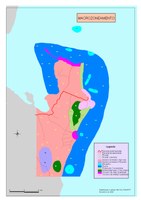
<p>The United Nations and the international community generally define Best Available Practices (BAPs) and Best Available Technologies (BATs) as ‘<i>outstanding contributions to improve the living environment’</i>. Indeed, the difference between BAPs and BATs is not always distinct, although BATs have a capital good  and technology transfer component to it, in practice, BATs could form an integral component  of BAPs and vice versa.</p>
<p>For the COAST Project, the following are examples of selected BAPs/BATs for the three thematic areas (<span style="text-align: start; float: none; ">Eco-tourism, Reef and Marine Recreation Management, Environmental Management Systems) in the COAST countries.</span></p>
<p> </p>
<table class="grid listing">
<tbody>
<tr>
<td>
<p><strong>THEMATIC AREA</strong></p>
</td>
<td>
<p><strong>COUNTRY</strong></p>
</td>
<td>
<p><strong>Selected Examples of BAPs and BATs in   Country Projects</strong></p>
</td>
</tr>
<tr>
<td>
<p><strong>ECO-TOURISM</strong></p>
</td>
<td>
<p><strong>Cameroon, Ghana, Gambia, Kenya,   Mozambique,   Nigeria, Tanzania</strong></p>
</td>
<td>
<p>Sustainable   Tourism-Eliminating Poverty (ST-EP) Program supported by the United Nations   World Tourism Organization (UNWTO).</p>
</td>
</tr>
<tr>
<td>
<p><strong>REEF AND MARINE RECREATION MANAGEMENT</strong></p>
</td>
<td>
<p><strong>Kenya, Mozambique,   Tanzania</strong></p>
</td>
<td>
<p>Mapping and   demarcation of zones and preparation of coastal zone management plans.</p>
</td>
</tr>
<tr>
<td rowspan="2">
<p><strong>ENVIRONMENTAL MANAGEMENT SYSTEMS</strong></p>
<p><strong> </strong></p>
</td>
<td>
<p><strong>Kenya, Mozambique, Tanzania, Senegal</strong></p>
</td>
<td>
<p>Applying   UNIDO’s TEST methodology to the local hotelier sector.  An integrated   methodology consisting of: Cleaner Production Assessment (CPA), Environmental   Management Accounting (EMA), Environmental Management Systems (EMS),   Environmentally Sound Technology (EST) and Corporate Social Responsibility   (CSR).</p>
</td>
</tr>
<tr>
<td>
<p><strong>Seychelles</strong></p>
</td>
<td>
<p>Sustainable   Eco-tourism Label.</p>
</td>
</tr>
</tbody>
</table>]]></content:encoded>
    <dc:publisher>No publisher</dc:publisher>
    <dc:creator>g.omedo@unido.org</dc:creator>
    <dc:rights></dc:rights>
    <dc:date>2012-09-28T08:55:00Z</dc:date>
    <dc:type>Page</dc:type>
  </item>


</rdf:RDF>