<?xml version="1.0" encoding="utf-8" ?>
<rdf:RDF xmlns:rdf="http://www.w3.org/1999/02/22-rdf-syntax-ns#" xmlns:dc="http://purl.org/dc/elements/1.1/" xmlns:syn="http://purl.org/rss/1.0/modules/syndication/" xmlns="http://purl.org/rss/1.0/">


<channel rdf:about="http://coast.iwlearn.org/en/search_rss">
  <title>English</title>
  <link>http://coast.iwlearn.org</link>

  <description>
    
            These are the search results for the query, showing results 81 to 95.
        
  </description>


  <image rdf:resource="http://coast.iwlearn.org/logo.png"/>

  <items>
    <rdf:Seq>
      
        <rdf:li rdf:resource="http://coast.iwlearn.org/en/News%20and%20Events/sustainable-coastal-tourism-in-the-news-2/ghana-governments-domestic-tourism-project-yielding-results"/>
      
      
        <rdf:li rdf:resource="http://coast.iwlearn.org/en/News%20and%20Events/sustainable-coastal-tourism-in-the-news-2/report-tourism-depleting-crucial-water-supplies-for-gambia"/>
      
      
        <rdf:li rdf:resource="http://coast.iwlearn.org/en/News%20and%20Events/sustainable-coastal-tourism-in-the-news-2/cape-town-ten-years-on-south-africa-outlines-plans-to-continue-its-global-leadership-in-responsible-tourism"/>
      
      
        <rdf:li rdf:resource="http://coast.iwlearn.org/en/News%20and%20Events/sustainable-coastal-tourism-in-the-news-2/safe-coastal-tourism-a-priority-says-world-committee-on-tourism-ethics"/>
      
      
        <rdf:li rdf:resource="http://coast.iwlearn.org/en/baps-and-bats/Project-Formats/useful-formats-and-templates"/>
      
      
        <rdf:li rdf:resource="http://coast.iwlearn.org/en/baps-and-bats/project-resources"/>
      
      
        <rdf:li rdf:resource="http://coast.iwlearn.org/en/baps-and-bats"/>
      
      
        <rdf:li rdf:resource="http://coast.iwlearn.org/en/baps-and-bats/project-resources-and-baps-bats"/>
      
      
        <rdf:li rdf:resource="http://coast.iwlearn.org/en/Newsletter"/>
      
      
        <rdf:li rdf:resource="http://coast.iwlearn.org/en/News%20and%20Events/sustainable-coastal-tourism-in-the-news-2/sustainable-coastal-tourism-in-the-news-1"/>
      
      
        <rdf:li rdf:resource="http://coast.iwlearn.org/en/images/partners"/>
      
      
        <rdf:li rdf:resource="http://coast.iwlearn.org/en/countries/cameroon/eco-tourism"/>
      
      
        <rdf:li rdf:resource="http://coast.iwlearn.org/en/countries/Mozambique/copy_of_reef-and-marine-recreation-and-management"/>
      
      
        <rdf:li rdf:resource="http://coast.iwlearn.org/en/countries/Mozambique/copy_of_ems"/>
      
      
        <rdf:li rdf:resource="http://coast.iwlearn.org/en/countries/Mozambique/copy_of_eco-tourism"/>
      
    </rdf:Seq>
  </items>

</channel>


  <item rdf:about="http://coast.iwlearn.org/en/News%20and%20Events/sustainable-coastal-tourism-in-the-news-2/ghana-governments-domestic-tourism-project-yielding-results">
    <title>Ghana Government's domestic tourism project yielding results</title>
    <link>http://coast.iwlearn.org/en/News%20and%20Events/sustainable-coastal-tourism-in-the-news-2/ghana-governments-domestic-tourism-project-yielding-results</link>
    <description>Accra, July 22, GNA - The Ministry of Tourism's effort to promote tourism is gaining momentum as promotional activities are yielding to good results, Mr Alphonse Kumaza, a torism officer at the Ministry told Ghana News Agency on Sunday.</description>
    <content:encoded xmlns:content="http://purl.org/rss/1.0/modules/content/"><![CDATA[<p>He said the project initiated by the sector Minister, Madam Akua Sena dansua aims to promote domestic tourism with special focus on educational institutions in the country.</p>
<p style="text-align: center; "><img src="http://coast.iwlearn.org/en/News%20and%20Events/sustainable-coastal-tourism-in-the-news-2/Waterlilies.jpg/@@images/1ffed15b-c562-4a82-87ff-cb77506334d5.jpeg" alt="Lilies" class="image-inline" title="Lilies" /></p>
<p style="text-align: center; ">The schools excursion programme, which was started 12th July, 2012 has been successfully completed for Volta, Northern and GT. Accra Regions.</p>
<p><strong><a class="external-link" href="http://www.ghananewsagency.org/details/Economics/Government-s-domestic-tourism-project-yielding-results-Tourism-Officer/?ci=3&amp;ai=46567">For more on this story here</a></strong></p>
<p><a href="http://www.ghananewsagency.org/details/Economics/Government-s-domestic-tourism-project-yielding-results-Tourism-Officer/?ci=3&amp;ai=46567">http://www.ghananewsagency.org/details/Economics/Government-s-domestic-tourism-project-yielding-results-Tourism-Officer/?ci=3&amp;ai=46567</a></p>]]></content:encoded>
    <dc:publisher>No publisher</dc:publisher>
    <dc:creator>g.omedo@unido.org</dc:creator>
    <dc:rights></dc:rights>
    <dc:date>2012-07-23T08:55:00Z</dc:date>
    <dc:type>News Item</dc:type>
  </item>


  <item rdf:about="http://coast.iwlearn.org/en/News%20and%20Events/sustainable-coastal-tourism-in-the-news-2/report-tourism-depleting-crucial-water-supplies-for-gambia">
    <title>Report: Tourism Depleting Crucial Water Supplies for Gambia</title>
    <link>http://coast.iwlearn.org/en/News%20and%20Events/sustainable-coastal-tourism-in-the-news-2/report-tourism-depleting-crucial-water-supplies-for-gambia</link>
    <description>Posted Tuesday, July 10th, 2012 at 4:40 am
A British-based organization says wasteful water consumption at tourist resorts across Gambia is threatening water access and livelihoods of citizens in the small west African nation.

Tourism Concern, which promotes ethical standards for global tourism, says resorts along the Gambian coast often dig their own bore holes to obtain water for their guests.</description>
    <content:encoded xmlns:content="http://purl.org/rss/1.0/modules/content/"><![CDATA[<div class="post_author" style="text-align: left; ">
<div class="stamp">Rachel Noble, the organization's head of policy and research, tells VOA the hotels have resorted to this practice due to inadequate infrastructure, which has made normal means of getting water not dependable. She says the tourism resorts are neither properly regulated for their water usage, nor monitored by the government.</div>
<div class="stamp"></div>
</div>
<div class="post_content" style="text-align: left; ">
<p>“The problem is that, generally, this water is considered free, and it's considered unlimited, which means that people are not paying for what they consume. A vast majority of the meters in the hotel are found not to be working, the water meters, so hotels are paying the same amount regardless of their occupation level.”</p>
<p>Noble says the rate of consumption is depleting fragile underwater reserves, which in turn is threatening Gambia's vital tourism sector. Tourism made up around 16 percent of the country's gross domestic product in 2010.</p>
<img src="http://coast.iwlearn.org/en/News%20and%20Events/sustainable-coastal-tourism-in-the-news-2/Waterlilies.jpg/@@images/ccd69765-acec-4f2f-b4d7-cfeda3abbee2.jpeg" alt="Lilies" class="image-left" title="Lilies" />
<p>She says the Gambian government should create a new water authority, but she adds that private industry must also play a role, due to the government's reputation for stifling opposition.</p>
<p>“It also puts an added responsibility on international hotels and tour operators operating in the Gambia. They need to be aware of these local contexts where local people, if they are being adversely affected, they might not be able to speak without fearing some kind of negative reprisal.”</p>
<p>Gambia was among five areas in or near the Southern Hemisphere included in a report released Monday by <em>Tourism Concern </em>that illustrates how tourism's consumption of water is aggravating poverty, curtailing economic opportunities and undermining livelihoods and sustainable development. The other areas were the island of Zanzibar off the coast of Tanzania, the southern Indian states of Goa and Kerala, and the Indonesian resort island of Bali.</p>
</div>
<div class="post_meta" style="text-align: left; ">
<div class="share_this_ft" style="padding-left: 15px; float: right; ">
<div class="share_this_item"></div>
<div class="share_this_item">
<div id="___plusone_0" style="float: none; "></div>
</div>
</div>
<div class="post_meta_left">
<div class="post_commentcount"></div>
<div class="post_tags">Tags: <a href="http://blogs.voanews.com/breaking-news/tag/gambia/" rel="tag">Gambia</a>, <a href="http://blogs.voanews.com/breaking-news/tag/water/" rel="tag">Water</a></div>
<div class="post_categories">Posted in <a href="http://blogs.voanews.com/breaking-news/category/af/" rel="category tag" title="View all posts in Africa">Africa</a></div>
<div class="post_categories"></div>
<div class="post_categories"><a class="external-link" href="http://blogs.voanews.com/breaking-news/2012/07/10/report-tourism-depleting-crucial-water-supplies-for-gambia/"><strong>For the full story here </strong></a></div>
</div>
</div>]]></content:encoded>
    <dc:publisher>No publisher</dc:publisher>
    <dc:creator>g.omedo@unido.org</dc:creator>
    <dc:rights></dc:rights>
    <dc:date>2012-07-23T08:40:00Z</dc:date>
    <dc:type>News Item</dc:type>
  </item>


  <item rdf:about="http://coast.iwlearn.org/en/News%20and%20Events/sustainable-coastal-tourism-in-the-news-2/cape-town-ten-years-on-south-africa-outlines-plans-to-continue-its-global-leadership-in-responsible-tourism">
    <title>Cape Town Ten Years on: South Africa Outlines Plans to Continue its Global Leadership in Responsible Tourism</title>
    <link>http://coast.iwlearn.org/en/News%20and%20Events/sustainable-coastal-tourism-in-the-news-2/cape-town-ten-years-on-south-africa-outlines-plans-to-continue-its-global-leadership-in-responsible-tourism</link>
    <description>The first country in the world to include Responsible Tourism as government policy in 1996 and currently the only globally-recognised Fair Trade tourist destination, South Africa played a fitting role leading the discussion at the International Conference ‘Taking Responsibility for Tourism’ on 21 June 2012 at the South African High Commission, London. The conference followed the United Nations Conference on Sustainable Development, Rio+20.</description>
    <content:encoded xmlns:content="http://purl.org/rss/1.0/modules/content/"><![CDATA[<p><img src="http://coast.iwlearn.org/en/News%20and%20Events/sustainable-coastal-tourism-in-the-news-2/Bluehills.jpg/@@images/98e2df30-666e-4202-baed-f6d803a03cf1.jpeg" alt="Blue hills" class="image-left" title="Blue hills" />The <strong>Deputy Minister for Tourism in South Africa, Tokozile Xasa</strong>, outlined South Africa’s vision for the future and measures which will build on the country’s leading position as a pioneer of Responsible Tourism. These include government policy and practical frameworks which have direct benefits for tourism and local communities:</p>
<ul>
<li>A new, comprehensive, <strong>National Strategy for Responsible Tourism in South Africa</strong> is to be issued, which contains action plans to guide implementation and mechanisms to measure progress. The strategy promotes working more closely with the tourism sector to maximise the local economic benefits which tourism can bring to local communities and already has the support and endorsement of a growing cross-section of stakeholders.</li>
<li>The new<strong> National Tourism Sector Strategy</strong> (NTSS 2011), launched in March 2011 - a blueprint for the tourism sector in South Africa - sets a new vision and growth targets, including making South Africa one of the top 20 destinations by 2020, committing the tourism sector to create a total of 225 000 jobs in 2020 and to increase tourism’s contribution to the economy from R189,4 billion (2009) to R499 billion by 2020. The new NTSS boldly recognises that these ambitious growth targets should be achieved in a responsible and sustainable manner; appreciative of the fact that South Africa’s natural environment and people are its greatest tourism resources.</li>
<li>The new <strong>Tourism Draft Bill</strong> aims to provide for the development and promotion of sustainable tourism for the social, economic and environmental benefit of South African citizens and for the enjoyment of all its residents and foreign visitors. </li>
</ul>
<p>In addition the Deputy Minister highlighted the importance tourism has in wider policy, and the impact therefore of Responsible Tourism across the board.</p>
<ul>
<li>Tourism is an integral component of South Africa’s <strong>New Growth Path</strong> (2010), which strives to significantly reduce unemployment and stimulate inclusive economic development.</li>
<li>South Africa’s <strong>Industrial Policy Action Plan</strong> (IPAP2), has identified the tourism sector as an important contributor to the development of rural areas and culture industries amongst others.</li>
</ul>
<p>As well as setting out current and developing Government policy the Deputy Minister also called for action from all areas of the industry:</p>
<p>“<em>Against this very positive platform we will reach out to the markets and reinvigorate them with South Africa’s unique proposition as the only globally recognised Fair Trade tourist destination. A place where our people and resources are valued and protected and visitors are able to have a </em><em>genuine connection with South Africa.</em> <em>We invite all the stakeholders to commit to mainstreaming responsible tourism, and make it an essential part of the way of doing business in the tourism sector. Let us work together to encourage the development of tourism products today, without compromising the needs of future generations</em><em>”</em><em> </em></p>
<p><strong>For a full transcript of the Deputy Minister’s speech for Taking Responsibility for Tourism email</strong><a href="mailto:susannah.glynn@kallaway.com" id="CNEEO1T"><strong><span id="CNEEO3T">susannah.glynn@kallaway.com</span></strong></a><strong></strong></p>
<p><strong>Dr Harold Goodwin, Director at the International Centre for Responsible Tourism and organizer of the London conference, said: <br /></strong><em>‘Two years on from the Cape Town Declaration it was important to bring together in South Africa House the leading destinations implementing Responsible Tourism strategies. South Africa leads the way but others are following a similar path, including Kerala and The Gambia. The meeting of minds between these enlightened destinations and the UK outbound industry was palpable; all forms of tourism can be more responsible and the big UK operators know that their customers expect them to deliver on the sustainability agenda. It is their responsibility to get on and do it.’</em></p>
<p><strong>Lungi Morrison, Destination Manager for South Africa Tourism UK, said:</strong></p>
<p><em>‘South Africa</em><em> strives to give visitors authentic experiences and heartfelt connections with the country. The fact that Responsible Tourism </em><em>has informed the development of the offer to the visitor means they have experiences that are</em><em>unique to them and it is also opening up new places and inspiring new experiences for the future. </em><em>We foster the talent and assets we have, rather than import a homogenous approach and create distinction through locally sourced and locally inspired tourism experiences. It also translates into the highest standards of quality coupled with value to meet the requirements of today’s market.’</em><em></em></p>
<p><strong>South Africa’s role in driving action in Responsible Tourism</strong></p>
<p>South Africa is widely recognised as a global leader in Responsible Tourism.</p>
<ul>
<li>The first country in the world to include Responsible Tourism as government policy in the <strong>1996 South African White Paper on Development and Promotion of Tourism in South Africa</strong></li>
<li><strong>Currently the only globally recognised Fair Trade tourist destination</strong>. South Africa was the first country to offer Fair Trade package holidays.</li>
<li>The country’s <strong>2002 National Guidelines for Responsible Tourism</strong> were hailed by tourism stakeholders worldwide as a bold initiative and ground breaking; so much so that they inspired global leaders in the sustainable tourism discourse when crafting the <strong>2002 Cape Town Declaration on Responsible Tourism</strong>.</li>
<li>South Africa is also the first country in Africa and second in the world (the other being the UK) to develop a<strong>National Minimum Standard for Responsible Tourism (NMSRT)</strong>, which was launched by the Minister on 12 September 2011.</li>
</ul>
<p><strong>Responsible Tourism means a stronger visitor offer</strong></p>
<p>Today sustainable tourism permeates all areas of South Africa’s country’s tourism offering, from its world renowned coastline to its famed gastronomy. For visitors to South Africa Responsible Tourism means authentic experiences, unique, unparalleled opportunities for the visitor, as well as accommodation which is sustainable as it is stylish and affordable holidays which won’t cost the Earth. Examples of Responsible Tourism in action include:</p>
<ul>
<li>Marine Dynamic Tours (www.sharkwatchsa.com), marine tours which not only show you South Africa’s ‘Marine Big 5’ (whales, sharks, dolphins, seals and penguins) but involve you directly in their conservation, with the tours guided by members of local communities whose invaluable contribution is recognised as an important part of a business’ tourism offering.</li>
<li>Grootbos Nature Reserve (www.grootbos.com), where safaris are as sustainable as they are stylish, demonstrating that, by implementing good practice at the start, responsible tourism doesn’t have to mean compromising on comfort and enjoyment.</li>
<li>Andulela cooking safaris, informal cooking sessions in local homes in the townships of Langa Gugulethu and Khayelitsha.</li>
</ul>
<p>Issued by Kallaway on behalf of South African Tourism</p>
<p>For further information contact:</p>
<p>Kgomotso Ramothea at SA Tourism                           Susannah Glynn at Kallaway</p>
<p>Tel: +44 20 8971 9350                                               Tel: 020 7221 7883</p>
<p>Email: <a href="http://www.cisionwire.com/kallaway/r/..:..:..:Local%20Settings:Temporary%20Internet%20Files:Content.IE5:CLE341Y7:kgomotso@southafrica.net" id="CNEEO2T"><span id="CNEEO4T">kgomotso@southafrica.net</span></a> Email: <span id="CNEEO5T">Susannah.glynn@kallaway.com</span></p>
<p>Website <a href="http://www.southafrica.net/">www.southafrica.net</a></p>
<p>Register on our media extranet to browse the latest news releases (from SA Tourism as well as the tourism industry in general), access the news archive and get details of all upcoming tourism industry events (both locally and internationally).</p>
<p><b><a class="external-link" href="http://mediaextranet.southafrica.net">http://mediaextranet.southafrica.net</a></b></p>
<p><strong>About South Africa</strong></p>
<p>Nearly half a million visitors from the UK are drawn to South Africa each year, lured by its rich history, vibrant contemporary culture, scenic beauty and wildlife. The country’s iconic attractions include Mvezo, the birthplace of Nelson Mandela, cosmopolitan Cape Town and the 5.2sq mile Kruger National Park. South Africa was the first country in the world to include Responsible Tourism as part of government policy and for almost 20 years has acted as a major driving force for change in the sector. The visitor to South Africa can expect an unparalleled authentic experience, accommodation which is sustainable as it is stylish and affordable getaways which don’t cost the Earth.</p>
<p><strong>About South African Tourism</strong></p>
<p>South African Tourism is the national tourism agency responsible for the marketing of South Africa as a preferred tourist destination. In the UK it is headed up by Destination Manager Lungi Morrison.</p>
<p><strong>- END TO ALL -</strong></p>
<p><strong><br /></strong></p>]]></content:encoded>
    <dc:publisher>No publisher</dc:publisher>
    <dc:creator>g.omedo@unido.org</dc:creator>
    <dc:rights></dc:rights>
    <dc:date>2012-07-23T08:33:40Z</dc:date>
    <dc:type>News Item</dc:type>
  </item>


  <item rdf:about="http://coast.iwlearn.org/en/News%20and%20Events/sustainable-coastal-tourism-in-the-news-2/safe-coastal-tourism-a-priority-says-world-committee-on-tourism-ethics">
    <title>Safe coastal tourism a priority says World Committee on Tourism Ethics</title>
    <link>http://coast.iwlearn.org/en/News%20and%20Events/sustainable-coastal-tourism-in-the-news-2/safe-coastal-tourism-a-priority-says-world-committee-on-tourism-ethics</link>
    <description>Jul 13, 2012
The eleventh meeting of the World Committee on Tourism Ethics closed in Rome, Italy, on July 13, with calls to make “Safe Coastal Tourism” a priority in coastal destinations worldwide.</description>
    <content:encoded xmlns:content="http://purl.org/rss/1.0/modules/content/"><![CDATA[<div id="fullpage" style="text-align: left; ">
<p><img src="http://coast.iwlearn.org/en/images/Sunset.jpg/@@images/1350ae99-9265-4c65-a820-c78107d69ebf.jpeg" alt="Sunset" class="image-right" title="Sunset" />The committee heard from invited guest, Caroline Danneels, founder of the nonprofit organization, “Safe Coastal Tourism,” on the importance of safety precautions at beaches and marinas across the globe. Based in the Flemish community of Belgium, the organization works to raise awareness of the crucial need for adequate safety measures and the provision of accurate information to tourists to prevent often fatal accidents at coastal sites. Committee members drew particular attention to the need for safety warnings, in the form of signs and flags, to alert visitors to dangerous conditions, and the absolute necessity of lifeguards and life buoys to aid in rescues, even during tourist “low-season,”</p>
<p>As the body responsible for promoting and monitoring the implementation of the UN World Tourism Organization (UNWTO) Global Code of Ethics for Tourism, the committee applauded the signature of the first private sector commitment to the Global Code of Ethics by 11 of Spain’s most prominent tourism companies at the 1st International Congress on Ethics and Tourism (September 15-16, 2011, Madrid, Spain). This commitment represents a public pledge on behalf of tourism enterprises to implement and promote the values enshrined in the Code of Ethics, both by integrating ethical practices into their business operations, and by reporting periodically to the committee on their actions in this regard.</p>
<p>The body further analyzed a number of pressing ethical issues, including the fight against human trafficking and child exploitation, the road to greater gender equality and accessibility in tourism, and developments for the protection of tourists/consumers and tourism enterprises. With reference to the latter, the committee reiterated its support for UNWTO’s preparation of an international legal instrument in this area.</p>
<p>Committee members further backed UNWTO’s firm stand against human trafficking, especially child trafficking, in the tourism sector, applauding the organization’s signature of a cooperation agreement with the United Nations Office on Drugs and Crime (UNODC) in April 2012. In the sphere of accessible tourism, the committee reasserted its support of the collaboration between UNWTO, the Spanish ONCE Foundation, and ACS Foundation, as well as the European Network for Accessible Tourism (ENAT), in the interest of improving tourism’s accessibility, particularly for persons with disabilities.</p>
</div>
<div class="source" style="text-align: left; ">Source:<b> <a class="external-link" href="http://www.eturbonews.com/30160/safe-coastal-tourism-priority-says-world-committee-tourism-ethic">eTN GLOBAL TRAVEL NEWS</a></b></div>
<div class="terms" style="text-align: left; ">
<ul class="inline links">
<li class="taxonomy_term_3099 first" style="list-style-type: none; "><a class="taxonomy_term_3099" href="http://www.eturbonews.com/tag/beaches" rel="tag">BEACHES</a></li>
<li class="taxonomy_term_25203" style="list-style-type: none; padding-left: 0.2em; "><a class="taxonomy_term_25203" href="http://www.eturbonews.com/tag/coastal-tourism" rel="tag">COASTAL TOURISM</a></li>
<li class="taxonomy_term_201" style="list-style-type: none; padding-left: 0.2em; "><a class="taxonomy_term_201" href="http://www.eturbonews.com/global-issues" rel="tag">GLOBAL ISSUES</a></li>
<li class="taxonomy_term_37040" style="list-style-type: none; padding-left: 0.2em; "><a class="taxonomy_term_37040" href="http://www.eturbonews.com/tag/safe-coastal-tourism" rel="tag">SAFE COASTAL TOURISM</a></li>
<li class="taxonomy_term_37039" style="list-style-type: none; padding-left: 0.2em; "><a class="taxonomy_term_37039" href="http://www.eturbonews.com/tag/safe-coasts" rel="tag">SAFE COASTS</a></li>
<li class="taxonomy_term_27800 last" style="list-style-type: none; padding-left: 0.2em; "><a class="taxonomy_term_27800" href="http://www.eturbonews.com/tag/tourism-ethics" rel="tag">TOURISM ETHICS</a></li>
</ul>
</div>]]></content:encoded>
    <dc:publisher>No publisher</dc:publisher>
    <dc:creator>g.omedo@unido.org</dc:creator>
    <dc:rights></dc:rights>
    <dc:date>2012-07-23T06:18:15Z</dc:date>
    <dc:type>News Item</dc:type>
  </item>


  <item rdf:about="http://coast.iwlearn.org/en/baps-and-bats/Project-Formats/useful-formats-and-templates">
    <title>Publications, Resources, Power Points and Useful Formats</title>
    <link>http://coast.iwlearn.org/en/baps-and-bats/Project-Formats/useful-formats-and-templates</link>
    <description>These are COAST Project Publications, Resources and other general user templates for our country Demo Sites, Focal Points, Demo Site Management Committee (DSMC) members and consultants working on various elements of the COAST Project. Here you will find easily downloadable documents, project brief templates, reporting formats and examples of duly filled forms. </description>
    <content:encoded xmlns:content="http://purl.org/rss/1.0/modules/content/"><![CDATA[<p><img src="http://coast.iwlearn.org/en/images/Temple%20point%2C%20Mida%20creek.JPG/@@images/08a6a3ef-253a-4581-89be-dd57d314c29c.jpeg" alt="Temple point, Mida creek.JPG" class="image-left" title="Temple point, Mida creek.JPG" /></p>
<p style="text-align: center; "> </p>
<p style="text-align: center; "><span class="visualHighlight">This is a live repository site for all the key COAST Project management resources including publications, reports, Powerpoint presentations and user templates. These resources are uploaded on a regular basis. <br /></span></p>
<p> </p>
<p style="text-align: center; "><b>DOWNLOADABLE FILES<br /></b></p>
<table class="grid listing" summary="Matrix with some Templates">
<tbody>
<tr>
<th>Name of Document</th><th>Summary</th><th>Download</th>
</tr>
<tr>
<td>RMRM Final Report for Kenya</td>
<td>Training Awareness Raising and Capacity Building Report for Watamu in Kenya</td>
<td><a href="http://coast.iwlearn.org/en/baps-and-bats/2014.05.28%20RMRM%20TARCB%20final%20report%20Kenya.pdf" class="internal-link">HERE</a></td>
</tr>
<tr>
<td>RMRM Final Report for Mozambique</td>
<td>Training Awareness Raising and Capacity Building Report for TBT in Mozambique</td>
<td><a href="http://coast.iwlearn.org/en/baps-and-bats/2014.05.28%20RMRM%20TARCB%20Final%20report%20%20Mozambique.pdf" class="internal-link"><span class="internal-link">HERE</span></a></td>
</tr>
<tr>
<td>RMRM Final Report for Tanzania</td>
<td>Training Awareness Raising and Capacity Building Report for Bagamoyo in Tanzania</td>
<td><a href="http://coast.iwlearn.org/en/baps-and-bats/2014.05.28%20RMRM%20TARCB%20Final%20Report%20Tanzania.pdf" class="internal-link">HERE</a></td>
</tr>
<tr>
<td>Kenya Baseline Report -RMRM June 2014</td>
<td>This Baseline Report was developed based on results from an initial stakeholder survey undertaken to inform the project activities between 11th and 20th October 2011, as well as findings emerging during the implementation of the project activities and a second stakeholder survey undertaken at the end of the project during May 2014</td>
<td><a href="http://coast.iwlearn.org/en/baps-and-bats/Kenya%20Baseline%20Report_June%202014.docx" class="internal-link">HERE</a></td>
</tr>
<tr>
<td>Tanzania Baseline RMRM Report 2014</td>
<td>
<table class="listing grid" summary="Matrix with some Templates">
<tbody>
<tr>
<td>This  Baseline Report was developed based on results from an initial  stakeholder survey undertaken to inform the project activities between  11th and 20th October 2011, as well as findings emerging during the  implementation of the project activities and a second stakeholder survey  undertaken at the end of the project during May 2014</td>
</tr>
</tbody>
</table>
</td>
<td><a href="http://coast.iwlearn.org/en/baps-and-bats/Tanzania%20Baseline%20Report%20June%202014.docx" class="internal-link">HERE</a></td>
</tr>
<tr>
<td>Mozambique RMRM Baseline Report 2014</td>
<td>This Baseline Report was developed based on results from an initial  stakeholder survey undertaken to inform the project activities between  11th and 20th October 2011, as well as findings emerging during the  implementation of the project</td>
<td><a href="http://coast.iwlearn.org/en/baps-and-bats/Mozambique_Baseline%20Report_June_2014.docx" class="internal-link">HERE</a></td>
</tr>
<tr>
<td>Mozambique Operational Management Strategy</td>
<td>Report shows how the RMRM theme area was executed in Kenya</td>
<td><a href="http://coast.iwlearn.org/en/baps-and-bats/2014.06.24%20Moz%20Sust%20manage%20plan.pdf" class="internal-link">HERE</a></td>
</tr>
<tr>
<td>Kenya Operational Management Strategy</td>
<td>Report shows how the RMRM theme area was executed in Kenya</td>
<td>
<p><a href="http://coast.iwlearn.org/en/baps-and-bats/2014.06.24%20Kenya%20operational%20manage%20strat.pdf" class="internal-link">HERE</a></p>
</td>
</tr>
<tr>
<td>Tanzania Operational Management Strategy</td>
<td>Report shows how the RMRM theme area was executed in Kenya</td>
<td><a href="http://coast.iwlearn.org/en/baps-and-bats/2014.06.24%20Tz%20Sust%20manage%20plan.pdf" class="internal-link">HERE</a></td>
</tr>
<tr>
<td><b>The COAST Project BAPs/BATs Elsevier Environmental Development Journal Paper</b></td>
<td style="text-align: justify; ">
<div dir="ltr" style="text-align: justify; ">A Paper published in the Elsevier Environmental Development Journal titled 'Demonstrating the adoption and linkages of global best available practices and technologies (BAPs/BATs) in reducing land based pollution in the Collaborative Actions for Sustainable Tourism (COAST) Project in Kenya, Mozambique and Tanzania'</div>
</td>
<td><a href="http://coast.iwlearn.org/en/baps-and-bats/Project-Formats/copy_of_COASTBAPBATPAPER2013.pdf" class="internal-link"><b>Here</b></a></td>
</tr>
<tr>
<td><b>KM&amp;C Products produced in the COAST Project</b></td>
<td style="text-align: justify; ">A pictorial summary of all the promotional materials (banners, stickers, brochures etc) produced under the COAST Project's KM&amp;C Strategy</td>
<td>
<p><a href="http://coast.iwlearn.org/en/baps-and-bats/Project-Formats/OCTOBER2012_COAST_KMC_ProductsPictorial14.10.20132.pdf" class="internal-link"><b>Here</b></a></p>
</td>
</tr>
<tr>
<td><b>Outline on the Sustainable Tourism Governance and Management State of Affairs Presentation<br /></b></td>
<td style="text-align: justify; ">A presentation by Marcel Leijzer, UNWTO, on the status of implementation of the STG&amp;M component of the COAST Project in Ada, Ghana during the 2<sup>nd</sup> STGM Workshop bringing together Gambia, Nigeria and Ghana.</td>
<td><a href="http://coast.iwlearn.org/en/baps-and-bats/Project-Formats/MARCELLEIJZERSTGMintroductionOct2013.ppt" class="internal-link"><b>Here</b></a></td>
</tr>
<tr>
<td><b>The STGM Workshop Facilitator Presentations</b></td>
<td>
<p style="text-align: justify; ">A set of presentations by the 2nd STGM Workshop facilitator Richard Denman, UNWTO, covering issues on global perspectives of coastal tourism, policies, plans and governance structures; influencing coastal tourism development;  role of economic incentives in the governance and management of sustainable tourism in coastal areas; and how to manage coastal environments linked to tourism.</p>
</td>
<td><a href="http://coast.iwlearn.org/en/baps-and-bats/Project-Formats/RD3ECONOMICINCENTIVESfinal.zip" class="internal-link"><b>Here</b></a></td>
</tr>
<tr>
<td><b>The Sustainable Tourism Governance and Management Publication<br /></b></td>
<td>
<p style="text-align: justify; ">The Sustainable Tourism Governance and Management in Coastal Areas of Africa publication presents the results of the research carried out within the framework of the COAST project. It builds on the UNWTO and UNEP publication Making Tourism More Sustainable – A Guide for Policy Makers, by assessing how to apply sustainability principles and policy instruments for coastal tourism development in Africa.</p>
</td>
<td><a href="http://coast.iwlearn.org/en/copy_of_131021_coast_management_africa_UNIDO_wm.pdf" class="internal-link"><b>Here</b></a></td>
</tr>
<tr>
<td><b>Economic Incentives Paper</b></td>
<td style="text-align: justify; "><b><i> </i></b>This study has been carried out within the framework of the COAST (Collaborative Actions for Sustainable Tourism) project in Africa. The Study looks at the application of economic incentives as instruments to stimulate the uptake of sustainability policies and actions and their potential application in the context of coastal tourism in Africa.</td>
<td><a href="http://coast.iwlearn.org/en/baps-and-bats/Project-Formats/FinalEconomicIncentivesPaperCOASTUNWTO2013.pdf" class="internal-link"><b>Here</b></a></td>
</tr>
<tr>
<td>
<p><b>5th SCM Ecotourism Presentations</b></p>
<p><b><br /></b></p>
</td>
<td style="text-align: justify; ">These presentations on the Ecotourism Thematic Area were presented at the 5th Steering Committee Meeting in Bagamoyo, Tanzania. They contain information and updates on progress in implementation at regional level (UNWTO) and at the country level.</td>
<td><b><a href="http://coast.iwlearn.org/en/baps-and-bats/Project-Formats/EcotourismPPTs.zip" class="internal-link">Here</a></b></td>
</tr>
<tr>
<td><b>5th SCM Environmental Management Systems (EMS-TEST) Presentations</b></td>
<td style="text-align: justify; ">These presentations on the Environmental Management Systems (EMS-TEST) Thematic Area were presented at  the 5th Steering Committee Meeting in Bagamoyo, Tanzania. They contain  information and updates on progress in implementation at regional level  (UNIDO) and at the country level.</td>
<td><a href="http://coast.iwlearn.org/en/baps-and-bats/Project-Formats/EMSTESTPPTs.zip" class="internal-link"><b><span class="internal-link">Here</span></b></a></td>
</tr>
<tr>
<td><b>5th SCM Reef &amp; Marine Recreation Management (RMRM)  Presentations</b></td>
<td style="text-align: justify; ">These presentations on the Reef and Marine Recreation Management (RMRM)  Thematic Area were presented at  the 5th Steering Committee Meeting in  Bagamoyo, Tanzania. They contain  information and updates on progress in  implementation at regional level  (EcoAfrica) and at the country level.</td>
<td><a href="http://coast.iwlearn.org/en/baps-and-bats/Project-Formats/ReefMarineRecreationPPTs.zip" class="internal-link"><b>Here</b></a></td>
</tr>
<tr>
<td><b>5th SCM Knowledge Management and Communications Presentations</b></td>
<td style="text-align: justify; ">These presentations on the Knowledge Management and Communications area were presented at  the 5th Steering Committee Meeting in  Bagamoyo, Tanzania. They contain  information and updates on progress in  implementation at regional level  (UNIDO) and at the country level.</td>
<td><a href="http://coast.iwlearn.org/en/baps-and-bats/Project-Formats/KMCPPTs.zip" class="internal-link"><span class="internal-link"><b><span class="internal-link">Here</span></b></span></a></td>
</tr>
<tr>
<td><b>Knowledge Management and Communication Presentation for The Gambia <br /></b></td>
<td style="text-align: justify; ">Presentation used to train key partners and stakeholders on the COAST Project KM&amp;C Strategy</td>
<td><a href="http://coast.iwlearn.org/en/baps-and-bats/Project-Formats/2013417FinalKMCWorkshopPresentationGambia.pdf" class="internal-link"><b>Here</b></a></td>
</tr>
<tr>
<td><b>Basics of Social Media for Corporate Communications <br /></b></td>
<td>Presentation used to train key partners and stakeholders on the use of social media for corporates<br /></td>
<td><a href="http://coast.iwlearn.org/en/baps-and-bats/Project-Formats/2013416FinalSocialMediaPresentationGambia.pdf" class="internal-link"><b>HERE</b></a></td>
</tr>
<tr>
<td><b>Webraising Presentation 1<br /></b></td>
<td>Presentations on '<i>How To Guide</i>' for webraising used for the webraising training in Kenya <br /></td>
<td><a href="http://coast.iwlearn.org/en/baps-and-bats/project-resources/Watamu%20Web%20Raising%20Day%202%20How%20To%20Guides%20Final.pdf" class="internal-link"><b>HERE</b></a></td>
</tr>
<tr>
<td><b>Webraising Presentation 2<br /></b></td>
<td>Presentations used for the webraising training in Kenya (Day 1 part 2)<br /></td>
<td><a href="http://coast.iwlearn.org/en/baps-and-bats/project-resources/Watamu%20Web%20Raising%20Day%201%20part%202%20Final%20%282%29.pdf" class="internal-link"><span class="internal-link"><b>HERE </b></span></a></td>
</tr>
<tr>
<td><b>Webraising Presentation 3</b></td>
<td>Presentations used for the webraising training in Kenya (Day 1 part 3)</td>
<td><a href="http://coast.iwlearn.org/en/baps-and-bats/project-resources/Watamu%20Web%20Raising%20Day%201%20part%203%20Final_0.pdf" class="internal-link"><span class="internal-link"><b>HERE</b></span></a></td>
</tr>
<tr>
<td><b>Webraising Presentation 4</b></td>
<td>Presentations used for the webraising training in Kenya (Day 2 part 1)</td>
<td><a href="http://coast.iwlearn.org/en/baps-and-bats/project-resources/Watamu%20Web%20Raising%20session%20Day%202%20part%201%20Final.pdf" class="internal-link"><span class="internal-link"><b>HERE</b></span></a></td>
</tr>
<tr>
<td><b>Training Format for planning an Event</b></td>
<td>
<p style="text-align: justify; ">Training Format – For use by Focal Points (FPs) and Demo Project Coordinators (DPCs) when planning a Training Event</p>
</td>
<td style="text-align: left; "><b><a href="http://coast.iwlearn.org/en/baps-and-bats/Project-Formats/training-format-for-planning-event" class="internal-link">HERE</a></b><b> </b></td>
</tr>
<tr>
<td><b>Accounting Format for Reporting Project Expenditure</b></td>
<td style="text-align: justify; ">This details how to report expenditure. The FPs and DPCs are expected to submit this form to the COAST Project Office on quarterly basis</td>
<td style="text-align: left; "><b><a href="http://coast.iwlearn.org/en/baps-and-bats/Project-Formats/unido-monthly-support-meeting-format" class="internal-link">HERE</a></b><b> </b></td>
</tr>
<tr>
<td><b>COAST Training Outcome Report Format</b></td>
<td>
<p style="text-align: justify; ">Training Outcome Report Format – COAST Project</p>
</td>
<td><b><a href="http://coast.iwlearn.org/en/baps-and-bats/Project-Formats/training-outcome-report-format" class="internal-link">HERE</a></b><b> </b></td>
</tr>
<tr>
<td><b>UNIDO Monthly Support Meeting Formats</b></td>
<td style="text-align: justify; ">Report Format for Activities &amp; Report Format for Financial Expenditure</td>
<td><b><a href="http://coast.iwlearn.org/en/baps-and-bats/Project-Formats/unido-monthly-support-meeting-format" class="internal-link">HERE</a></b><b> </b></td>
</tr>
<tr>
<td><b>Co-Funding Report Format for Partner Countries</b></td>
<td style="text-align: justify; ">Tracking of Government In-Kind/Co-Financing in COAST Project</td>
<td><b><a href="http://coast.iwlearn.org/en/baps-and-bats/Project-Formats/co-funding-report-format-for-countries" class="internal-link">HERE</a></b><b> </b></td>
</tr>
<tr>
<td><b>Table Showing Demo Participants Attending Trainings</b></td>
<td style="text-align: justify; ">Demo Participants Attending Trainings</td>
<td><b><a href="http://coast.iwlearn.org/en/baps-and-bats/Project-Formats/training-evaluation-form" class="internal-link">HERE</a></b><b> </b></td>
</tr>
<tr>
<td><b>Training Questionnaire</b></td>
<td>
<p style="text-align: left; ">Post-Training Evaluation</p>
</td>
<td><b><a href="http://coast.iwlearn.org/en/baps-and-bats/Project-Formats/training-evaluation-form" class="internal-link">HERE</a></b><b> </b></td>
</tr>
<tr>
<td><b>Revised Project Brief Structure</b></td>
<td>
<p style="text-align: left; ">Project Brief</p>
</td>
<td><b><a href="http://coast.iwlearn.org/en/baps-and-bats/Project-Formats/revised-project-brief-template" class="internal-link">HERE</a></b><b> </b></td>
</tr>
<tr>
<td><b>Quarterly Report Format (Financial Revision)</b></td>
<td>
<p style="text-align: left; ">Project statement of the expenditure and balance (in US$) covering the specified project period</p>
</td>
<td style="text-align: left; "><b><a href="http://coast.iwlearn.org/en/baps-and-bats/Project-Formats/quarterly-report-format" class="internal-link">HERE</a></b></td>
</tr>
<tr>
<td><br /></td>
<td></td>
<td></td>
</tr>
<tr>
<td></td>
<td></td>
<td></td>
</tr>
<tr>
<td></td>
<td></td>
<td></td>
</tr>
</tbody>
</table>]]></content:encoded>
    <dc:publisher>No publisher</dc:publisher>
    <dc:creator>g.omedo@unido.org</dc:creator>
    <dc:rights></dc:rights>
    <dc:date>2012-07-19T12:50:00Z</dc:date>
    <dc:type>Page</dc:type>
  </item>


  <item rdf:about="http://coast.iwlearn.org/en/baps-and-bats/project-resources">
    <title>Project Resources</title>
    <link>http://coast.iwlearn.org/en/baps-and-bats/project-resources</link>
    <description>Sustainable COAST Tourism projects benefit immensely from a number of key resources</description>
    
    <dc:publisher>No publisher</dc:publisher>
    <dc:creator>g.omedo@unido.org</dc:creator>
    <dc:rights></dc:rights>
    <dc:date>2012-07-19T12:33:11Z</dc:date>
    <dc:type>Folder</dc:type>
  </item>


  <item rdf:about="http://coast.iwlearn.org/en/baps-and-bats">
    <title>Best Available Practices and Technologies</title>
    <link>http://coast.iwlearn.org/en/baps-and-bats</link>
    <description>Best Available Practices (BAPs) and Best Available Technologies (BATs) are outstanding contributions to improve the living environment. </description>
    
    <dc:publisher>No publisher</dc:publisher>
    <dc:creator>g.omedo@unido.org</dc:creator>
    <dc:rights></dc:rights>
    <dc:date>2012-07-19T12:30:00Z</dc:date>
    <dc:type>Folder</dc:type>
  </item>


  <item rdf:about="http://coast.iwlearn.org/en/baps-and-bats/project-resources-and-baps-bats">
    <title>BAPs and BATs in the COAST Project</title>
    <link>http://coast.iwlearn.org/en/baps-and-bats/project-resources-and-baps-bats</link>
    <description></description>
    <content:encoded xmlns:content="http://purl.org/rss/1.0/modules/content/"><![CDATA[<h2><b>What are BAPs/BATs? </b></h2>
<p style="text-align: justify; "><img src="http://coast.iwlearn.org/en/images/mozam01.jpg/@@images/132f477d-033e-4d78-a8de-7697ad24ab23.jpeg" alt="mozam01.jpg" class="image-left" title="mozam01.jpg" /></p>
<p style="text-align: justify; "> </p>
<p style="text-align: justify; ">In a broad perspective, Best Available Practices (BAPs) and Best Available Technologies (BATs) are outstanding contributions to improve the living environment. They are defined by the United Nations and the International Community as successful initiatives.</p>
<p style="text-align: justify; "> </p>
<p style="text-align: justify; ">Additional characterization for BAPs/BATs includes activities that:</p>
<ul>
<li>Have a demonstrable and tangible impact on improving people’s quality of life;</li>
<li>Are the result of effective partnerships between the public, private and civic sectors of society;</li>
<li>Are socially, culturally, economically and environmentally sustainable.</li>
</ul>
<p style="text-align: justify; "> </p>
<p style="text-align: justify; ">BAPs/BATs are promoted and used by the United Nations and the international community as a means of:</p>
<ul>
<li>Improving public policy based on what works;</li>
<li>Raising awareness of decision-makers at all levels and of the public of potential solutions to common social, economic and environmental problems;</li>
<li>Sharing and transferring knowledge, expertise and experience through networking and peer-to-peer learning.</li>
</ul>
<h2 style="text-align: justify; "><b> </b></h2>
<p style="text-align: justify; "> </p>
<h3><b>Criteria for BAPs/BATs<br /></b></h3>
<table class="grid listing">
<tbody>
<tr>
<td>
<p align="center"><b>BAP/BAT CRITERIA</b></p>
</td>
<td>
<p align="center"><b>DEFINITION</b></p>
</td>
</tr>
<tr>
<td colspan="2">
<p align="center"><b>PRIMARY CRITERIA</b></p>
</td>
</tr>
<tr>
<td>
<p><b>Impact</b></p>
</td>
<td>
<p>The practice/technology must show a demonstrable and   tangible impact on improving people’s quality of life.</p>
</td>
</tr>
<tr>
<td>
<p><b>Partnership</b></p>
</td>
<td>
<p>Effective partnerships between   the public, private and/or civic sectors of society should be clearly   demonstrated.</p>
</td>
</tr>
<tr>
<td>
<p><b>Sustainability</b></p>
</td>
<td>
<p>The   practice/technology must be socially, culturally, economically and   environmentally sustainable.</p>
</td>
</tr>
<tr>
<td colspan="2">
<p align="center"><b>SECONDARY CRITERIA</b></p>
</td>
</tr>
<tr>
<td>
<p><b>Leadership and Community   Empowerment</b></p>
</td>
<td>
<p>The practice/technology should show: leadership   in inspiring action and change, including change in public policy;empowerment of people, neighbourhoods and   communities and incorporation of their contributions; acceptance of and   responsiveness to social and cultural diversity; and appropriateness to local   conditions and levels of development.</p>
</td>
</tr>
<tr>
<td>
<p><b>Gender Equality and Social Inclusion</b></p>
</td>
<td>
<p>The practice/technology should accept and   respond to social and cultural diversity; promote social equality and equity,   for example on the basis of income, gender, age and physical/ mental   condition; and recognize and value different abilities.</p>
</td>
</tr>
<tr>
<td>
<p><b>Innovation   within local context and transferability</b></p>
</td>
<td>
<p>The practice/technology should   show how others have learnt or benefited from the initiative; should be able   to demonstrate the means used for sharing or transferring knowledge,   expertise and lessons learnt.</p>
</td>
</tr>
<tr>
<td>
<p><b>Transfers</b></p>
</td>
<td>
<p>The practice/technology should provide: tangible   impact resulting from the transfer of one or more of the following: ideas,   skills, processes, knowledge or expertise, and technology; changes in   policies or practices; sustainability of the transfer as part of a continuous   process of change.</p>
</td>
</tr>
</tbody>
</table>
<p><b><a href="http://coast.iwlearn.org/en/baps-and-bats/COASTBAPBATPAPER2013.pdf" class="internal-link">To see the COAST Project Paper on BAPs/BATs see here</a></b></p>]]></content:encoded>
    <dc:publisher>No publisher</dc:publisher>
    <dc:creator>g.omedo@unido.org</dc:creator>
    <dc:rights></dc:rights>
    <dc:date>2012-07-19T12:30:00Z</dc:date>
    <dc:type>Page</dc:type>
  </item>


  <item rdf:about="http://coast.iwlearn.org/en/Newsletter">
    <title>COAST Project Newsletter: 5th Quarterly Newsletter </title>
    <link>http://coast.iwlearn.org/en/Newsletter</link>
    <description>This is the Final COAST Project Newsletter. After 5 years of Project implementation, the project comes to an end, with our 5th COAST Project Newsletter that highlights some key results in the subject of sustainable coastal tourism in Africa. </description>
    <content:encoded xmlns:content="http://purl.org/rss/1.0/modules/content/"><![CDATA[<div id="stcpDiv">
<div id="stcpDiv">
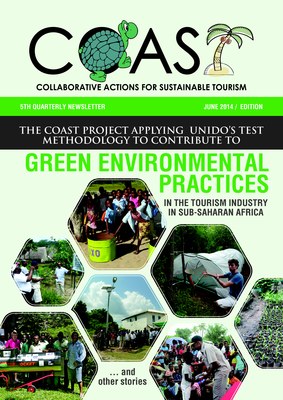
<p style="text-align: justify; ">The  Newsletter shares exclusive news updates insights, and results on the  implementation of the Environmental Management Systems (EMS) thematic  area of the COAST Project through UNIDO’s Transfer of Environmentally  Sound Technology (TEST) Methodology. It is instrumental to note here  that this is the first time the TEST Methodology is being applied to the  tourism industry in Sub-Saharan Africa, and this Newsletter <b>showcases  some of the emerging results in its application in the demonstration  sites in Watamu, Kenya; Inhambane, Mozambique; Saly, Senegal; and  Bagamoyo, Tanzania.</b></p>
<p style="text-align: justify; ">This Newsletter contains the following stories and articles:</p>
<ul>
<li>A Foreword by the <b>UNIDO Chief of the Water Management      UNIT Mr. Igor Volodin; </b><img src="http://coast.iwlearn.org/en/5TH%20NEWSLETTER%20COVER.jpg/@@images/59ff4ec5-f883-46bc-adf9-f31435c867bd.jpeg" alt="5TH NEWSLETTER COVER.jpg" class="image-right" title="5TH NEWSLETTER COVER.jpg" /></li>
<li> A Special Feature showing <b>selected Highlights from      the EMS/TEST implementation in the four countries at the Demonstration      Sites;</b> </li>
<li>Some News from the final <b>Participatory Results      Reporting Tool workshops </b>held in a number of the<b> COAST Project Demo Sites;</b></li>
<li><b>A picture gallery </b>of the COAST Project Demo Site      activities;</li>
<li>A <b>Question &amp; Answer Session</b> with the UNIDO COAST Project      Manager Mr. Ludovic Bernaudat;</li>
<li>An Opinion Article by the <b>Tanzania National Cleaner Production Center (CPCT)</b> on their <b>Experiences working in partnership to implement the UNIDO TEST Methodology tools to      selected hotels in Bagamoyo, Tanzania. </b></li>
<li><b>An analysis article</b><b> Showcasing the </b>Seychelles      Sustainable Tourism Label (SSTL);</li>
</ul>
<div id="stcpDiv"></div>
</div>
</div>
<div><br />
<p> </p>
<p><b><span class="internal-link">To read the stories in the attached <span class="internal-link"> </span></span></b><span class="internal-link"><span class="internal-link"> </span></span><a href="http://coast.iwlearn.org/en/5TH%20NEWSLETTER%20%28lowres%29.pdf" class="internal-link"><span class="internal-link"><span class="internal-link"><span class="external-link"><span class="internal-link">download the English PDF Newsletter Edition here. </span></span></span></span></a><b><span class="internal-link"><span class="internal-link"><span class="external-link"><span class="internal-link"> </span></span></span></span><a href="http://coast.iwlearn.org/en/4th%20COAST%20Project%20Newsletter%20Revised%20Edition%202%28Nov%202013%29.pdf" class="internal-link"><span class="internal-link"><span class="external-link"><span class="internal-link"><br /></span></span></span></a></b></p>
<p style="text-align: center; "> </p>
<p style="text-align: center; "><b><span class="visualHighlight">For our Francophone readers, the <span class="internal-link"><span class="internal-link">French PDF Newsletter Edition CAN</span></span></span></b><a href="http://coast.iwlearn.org/en/5TH%20COAST%20PROJECT%20NEWSLETTER%20%28FRENCH%29%202014.pdf" class="internal-link"><span class="visualHighlight"><span class="internal-link"><span class="internal-link"> BE DOWNLOADED HERE!!!!</span></span></span></a><b><span class="visualHighlight"><span class="internal-link"><span class="internal-link"><br /></span></span></span></b></p>
<p style="text-align: center; ">Please,  share with us your feedback on   any of these stories. If you want us to  follow up on any of these   stories, or would wish more information on  these articles, please write   to the COAST Project's Knowledge Management  and Communications  Officer  on the contacts below.</p>
<p style="text-align: center; "><b>THE EDITORIAL TEAM - UNIDO COAST PROJECT</b></p>
<p align="center"> </p>
<h3 style="text-align: center; "><b>E-mail:</b><span class="Apple-converted-space"> L.Bernaudat@unido.org; </span><b><a href="mailto:g.omedo@unido.org?subject=Newsletter"></a></b></h3>
</div>]]></content:encoded>
    <dc:publisher>No publisher</dc:publisher>
    <dc:creator>g.omedo@unido.org</dc:creator>
    <dc:rights></dc:rights>
    <dc:date>2012-07-19T09:21:49Z</dc:date>
    <dc:type>EasyNewsletter</dc:type>
  </item>


  <item rdf:about="http://coast.iwlearn.org/en/News%20and%20Events/sustainable-coastal-tourism-in-the-news-2/sustainable-coastal-tourism-in-the-news-1">
    <title>Sustainable Coastal Tourism In the NEWS</title>
    <link>http://coast.iwlearn.org/en/News%20and%20Events/sustainable-coastal-tourism-in-the-news-2/sustainable-coastal-tourism-in-the-news-1</link>
    <description>In the Press: Well-managed tourism can help protect the world’s wetlands. Ramsar Secretariat and World Tourism Organization. Well-managed tourism can help protect the world’s wetlands. Tuesday, July 10, 2012

Whether kayaking in the Ibera Marshes in Argentina or bird-watching at Ba-Be Lake in Vietnam, tourists are providing income for the conservation of wetlands worldwide, as demonstrated in a new publication launched by the Ramsar Secretariat and UNWTO.</description>
    <content:encoded xmlns:content="http://purl.org/rss/1.0/modules/content/"><![CDATA[<p style="text-align: justify; ">Besides providing essential services  such as water, food and energy, wetlands offer significant opportunities  for tourism, which can in turn deliver economic benefits for local  communities and the sustainable management of wetlands, according to the  publication<i>Destination Wetlands: Supporting Sustainable Tourism.</i></p>
<p style="text-align: justify; ">Growth in sustainable tourism not only reflects environmental  realities, but also a desire from tourists themselves to embrace green  tourism. <i>“There is a trend among tourists of turning towards green  forms of tourism, towards destinations that offer wildlife and  heritage,” </i>said <b>Cristian Barhalescu</b>, State Secretary, Ministry of Regional Development and Tourism of Romania.<i> “As wetlands, with their diversity and richness, become subject to  tourism development, the interconnection between tourism and wetlands  should be given special attention by all actors involved.”</i><br /><br /> Through 14 case studies, covering different wetland types around the  world, the publication demonstrates how sustainable tourism practices in  and around wetlands can contribute to conservation, economic growth,  poverty reduction and support to local cultures.<br /><br /> The publication  was launched at the 11th Meeting of the Conference of the Contracting  Parties to the Ramsar Convention on Wetlands (COP11) in Bucharest,  Romania (6-13 July 2012). Held under the theme Wetlands and Tourism,  COP11 will debate a landmark Resolution on Wetlands and Tourism, urging  sound tourism practices in wetlands.<br /><br /><i>"The adoption of this  Resolution on Tourism and Wetlands will provide an important framework  to help countries better recognize the linkages between wetlands and  tourism so as to develop sustainable tourism in wetlands and other  ecosystems. It proposes measures that they can take in the short and  long term to ensure sustainable wetland tourism," </i>said <b>Anada Tiega</b>, Secretary General of the Ramsar Convention. <i>"Of  course it is important to consider tourism in all wetlands – not just  those designated as Ramsar Sites – since the Contracting Parties to the  Convention are committed to managing all wetlands and promoting their  wise use."</i><br /><i><br /></i><i>“For Romania, the development of  eco-tourism in the wetlands is a priority, and an example in this  respect is the Danube Delta. Ramsar Sites in Romania must be placed at  the very centre of our attention and the Ministry of Environment and  Forests, together with the Ministry of Regional Development and Tourism,  will ensure that this becomes a reality,” </i>stated <b>Corneliu Mugurel</b> <b>Cozmanciuc</b>, State Secretary, Ministry of Environment and Forests of Romania.<br /><br /> The focus on tourism at COP11 comes on the back of increasing  collaboration between UNWTO and the Ramsar Secretariat. Since 2010, both  have been working together towards the development of sustainable  wetland tourism, with World Wetlands Day 2012 (2 February) celebrated  under the theme “Wetlands and Tourism: A Great Experience”.<br /><br /> “Wetlands are one of tourism’s greatest assets, attracting millions of  tourists each year,” said UNWTO Secretary-General, Taleb Rifai. “Working  in close partnership with the Ramsar Secretariat, UNWTO is determined  to sustainably manage wetland tourism through sound polices and  planning, thereby conserving them for the enjoyment of generations to  come.”<br /><br /> International tourist arrivals reached 982 million in  2011 and are expected to top one billion in 2012, generating over US$ 1  trillion in international tourism receipts. It is estimated that half of  all tourists travel to wetlands, particularly coastal areas.</p>
<div id="content-core">
<div class="kssattr-target-parent-fieldname-text-9666b324f0664c4e942643f4935e63a1 kssattr-macro-rich-field-view kssattr-templateId-widgets/rich kssattr-atfieldname-text " id="parent-fieldname-text-9666b324f0664c4e942643f4935e63a1">
<p style="text-align: justify; ">The full link to the article is found here: <a href="http://www.traveldailynews.com/pages/show_page/50307-Well-managed-tourism-can-help-protect-the-world%E2%80%99s-wetlands">http://www.traveldailynews.com/pages/show_page/50307-Well-managed-tourism-can-help-protect-the-world%E2%80%99s-wetlands</a>;</p>
</div>
</div>]]></content:encoded>
    <dc:publisher>No publisher</dc:publisher>
    <dc:creator>khristine</dc:creator>
    <dc:rights></dc:rights>
    <dc:date>2012-07-19T08:54:38Z</dc:date>
    <dc:type>News Item</dc:type>
  </item>


  <item rdf:about="http://coast.iwlearn.org/en/images/partners">
    <title>partners</title>
    <link>http://coast.iwlearn.org/en/images/partners</link>
    <description></description>
    
    <dc:publisher>No publisher</dc:publisher>
    <dc:creator>Taya Santives</dc:creator>
    <dc:rights></dc:rights>
    <dc:date>2012-07-12T18:48:41Z</dc:date>
    <dc:type>Folder</dc:type>
  </item>


  <item rdf:about="http://coast.iwlearn.org/en/countries/cameroon/eco-tourism">
    <title>Eco Tourism</title>
    <link>http://coast.iwlearn.org/en/countries/cameroon/eco-tourism</link>
    <description>Tttttt </description>
    
    <dc:publisher>No publisher</dc:publisher>
    <dc:creator>g.omedo@unido.org</dc:creator>
    <dc:rights></dc:rights>
    <dc:date>2012-07-12T13:20:04Z</dc:date>
    <dc:type>Folder</dc:type>
  </item>


  <item rdf:about="http://coast.iwlearn.org/en/countries/Mozambique/copy_of_reef-and-marine-recreation-and-management">
    <title>Reef and Marine Recreation and Management</title>
    <link>http://coast.iwlearn.org/en/countries/Mozambique/copy_of_reef-and-marine-recreation-and-management</link>
    <description>RMRM</description>
    
    <dc:publisher>No publisher</dc:publisher>
    <dc:creator>g.omedo@unido.org</dc:creator>
    <dc:rights></dc:rights>
    <dc:date>2012-07-12T13:19:50Z</dc:date>
    <dc:type>Folder</dc:type>
  </item>


  <item rdf:about="http://coast.iwlearn.org/en/countries/Mozambique/copy_of_ems">
    <title>EMS</title>
    <link>http://coast.iwlearn.org/en/countries/Mozambique/copy_of_ems</link>
    <description>EMS Tanzania</description>
    
    <dc:publisher>No publisher</dc:publisher>
    <dc:creator>g.omedo@unido.org</dc:creator>
    <dc:rights></dc:rights>
    <dc:date>2012-07-12T13:19:24Z</dc:date>
    <dc:type>Folder</dc:type>
  </item>


  <item rdf:about="http://coast.iwlearn.org/en/countries/Mozambique/copy_of_eco-tourism">
    <title>Eco Tourism </title>
    <link>http://coast.iwlearn.org/en/countries/Mozambique/copy_of_eco-tourism</link>
    <description>tttttt</description>
    
    <dc:publisher>No publisher</dc:publisher>
    <dc:creator>g.omedo@unido.org</dc:creator>
    <dc:rights></dc:rights>
    <dc:date>2012-07-12T13:19:12Z</dc:date>
    <dc:type>Folder</dc:type>
  </item>


</rdf:RDF>